

Why Now
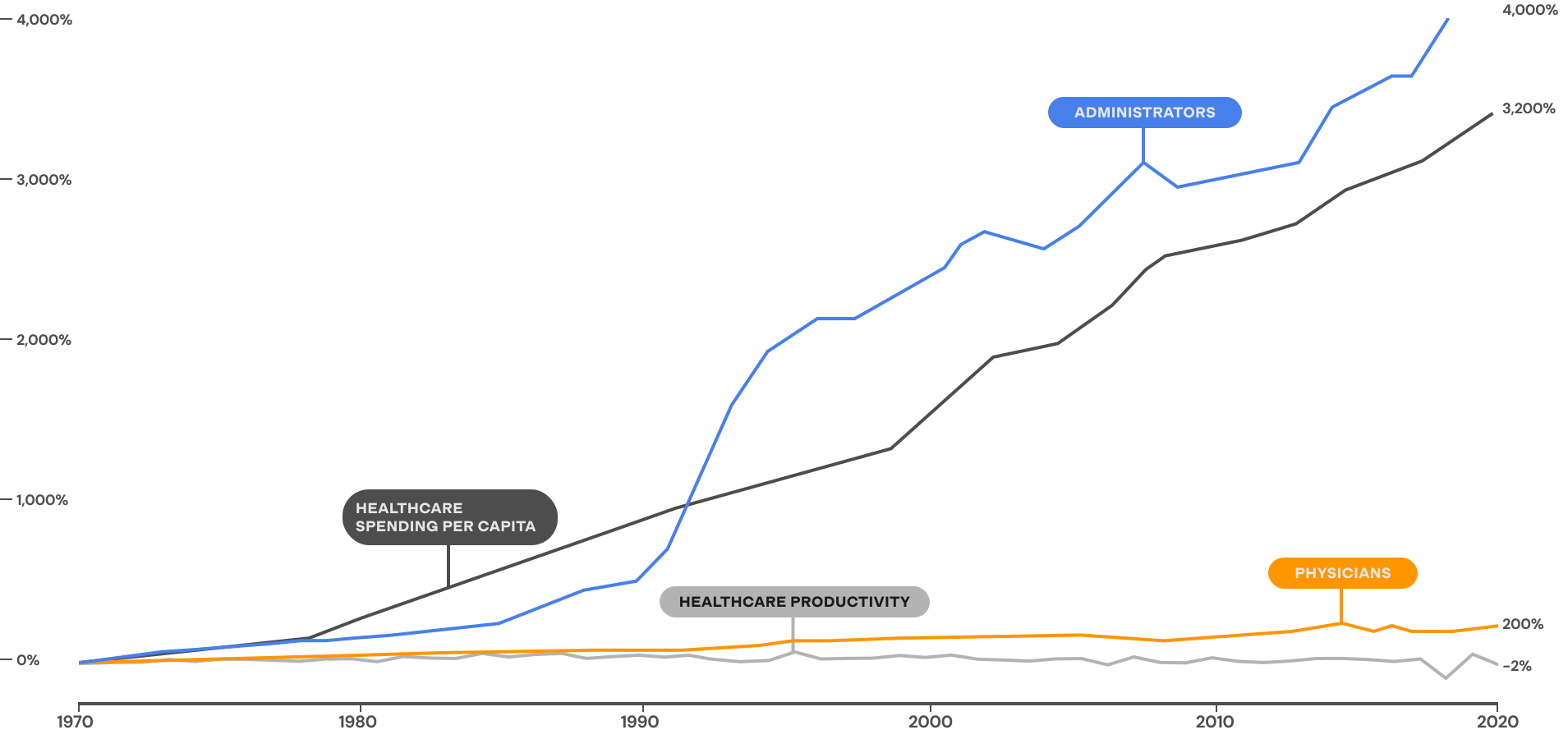
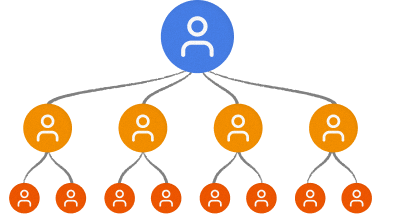
Healthcare administration is broken not because the information doesn't exist, but because the people responsible for acting on it are buried under the weight of doing it manually. Every health system employs thousands of people whose job is to be the glue — coordinating information between systems that don't talk to each other, routing decisions through layers of management, holding together a structure built for a world before AI. The result: a 4,000% increase in administrative headcount while physician capacity has grown by only 200%.


Our Mission
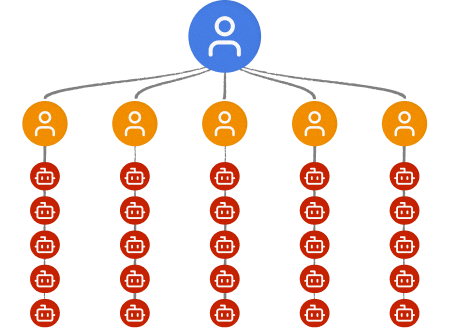
We founded Cofactor because we believe AI is the first technology capable of replacing that structure with intelligence — not making it 5% faster, but rebuilding the administrative function from the ground up so humans do the work that actually requires their attention: judgment, relationships, and strategic decisions.
We're building a fundamentally different way of running a health system — fewer administrative layers, more revenue captured, and a new System of Work.
Our Story

2018
The Founders Meet
Adi and Juan meet at UT Austin in the Innovations for Peace and Development Lab. They immediately click and begin working on numerous projects together.
2020
Princeton
Adi and Juan work together at Princeton’s Empirical Studies of Conflict lab.
2023
Cofactor's Birth
After shadowing healthcare workers in his family, Adi realizes that denials management is a problem that can be streamlined with artificial intelligence. He leaves Princeton to recruit Juan and begin Cofactor.
2023
Launching with a Seed Round
Cofactor raises $4M from Drive Capital to accelerate product development and bring value to hospitals nationwide.
2024
Building a Team
Cofactor is nothing without its team. Cofactor expands to a team of 10 and growing based in Chicago, IL.
2025
Piloting
Cofactor launches into its first systems, generating millions in lost revenue and saving countless hours for providers.
1979
The EHR
Epic invents the first electronic health record (EHR), transforming healthcare by providing a centralized, digital platform for patient medical information.
2010
Reduced Coding Errors
Growth of medical coding software for streamlined claims submissions and reduced coding errors
2015-2017
AI-Assisted Denials
Machine learning starts being applied to predict and prevent denials. AI-assisted denial prediction models enter mainstream RCM software.
2018-2020
FHIR & Interoperability
NLP advances improve automated claims review. Generative AI for RCM automation begins emerging. Interoperability rules drive better payer-provider data exchange
2023
Cofactor™ is Born
After shadowing healthcare workers, Adi discovers that denials management is a problem that can be streamlined with artificial intelligence and large language models. LLMs are applied to denial explanations and appeal generation.
1979
The EHR
Epic invents the first electronic health record (EHR), transforming healthcare by providing a centralized, digital platform for patient medical information.
2015-2017
AI-Assisted Denials
Machine learning starts being applied to predict and prevent denials. AI-assisted denial prediction models enter mainstream RCM software.

2010
Reduced Coding Errors
Growth of medical coding software for streamlined claims submissions and reduced coding errors.

2018-2020
FHIR & Interoperability
NLP advances improve automated claims review. Generative AI for RCM automation begins emerging. Interoperability rules drive better payer-provider data exchange.

2023
Cofactor™ is Born
After shadowing healthcare workers, Adi discovered that denial management can be streamlined with artificial intelligence and large language models. LLMs are applied to denial explanations and appeal generation.
.png)
2024
Raised a Seed Round
Cofactor™ raises $4M from Drive Capital to build healthcare's first financial intelligence layer and create value capture engine for hospitals nationwide.

2024
Raised a Seed Round
Cofactor™ raises $4M from Drive Capital to build healthcare's first financial intelligence layer and create value capture engine for hospitals nationwide.
2025
Cofactor™ Launches
Cofactor™ launches into its first systems, on track to recover millions in lost revenue and improve efficiency for providers.

2025
Cofactor™ Launches
Cofactor™ launches into its first systems, on track to recover millions in lost revenue and improve efficiency for providers.
Cofactor Leadership

Adi Tantravahi
Chief Executive Officer (CEO)

Juan Sebastian Lozano
Chief Technology Officer (CTO)

Our Founders
Juan Sebastian Lozano
CTO
Prior to Cofactor™, Juan worked at D-Wave, a leader in the development of quantum computing systems, for 2 years as an algorithms researcher. Previously, Juan was a full-time research specialist at Princeton University for nearly 3 years, working mainly on applied machine learning.
Juan’s academic and industry technical expertise made him the ideal choice to lead Cofactor’s engineering team.

Meet The Team

Luke Chan
Chief of Staff

Ikran Haji
Founding Software Engineer

Oran Lopez Reed
Founding GTM

Sai Krishna Gonuguntla
Founding AI/ML Engineer

Gowtham Pollam
Platform Engineer

Volodymyr Vakhniuk
Founding AI/ML Engineer

Amulya Usem
SWE

Camran Rynowecer
Founding Software Engineer