
How to Prepare for AI-Powered Payer Audits: A Strategic Guide for Revenue Cycle Leaders
DRG downgrades are on the rise. Medicare Advantage denials increased by 55.7% between 2022 and 2023, with payers increasingly deploying AI-powered systems to systematically challenge high-weighted DRGs like sepsis, respiratory failure, and acute kidney injury.
As VP of Revenue Cycle, you're not just managing today's denial volume, you're preparing your organization for an unprecedented wave of AI-powered scrutiny where documentation gaps will be flagged with surgical precision. The manual review processes that worked in the past simply won't withstand this level of systematic examination.
But here's what we know from hospitals already excelling in this space: organizations with strong documentation practices and modern appeal workflows don't just survive audits, they turn them into competitive advantages. The hospitals that thrive won't be those with the most staff, but those with the best systems and processes.
This guide breaks down what's really driving these downgrades, why the usual approaches don't work, and what you can do to change the equation.
1. The Stakes Have Never Been Higher
Per-Case Impact
- Average DRG downgrade recovery: $3,000–$7,000 per successful appeal
- Cost to process each traditional appeal: ~$80–90+
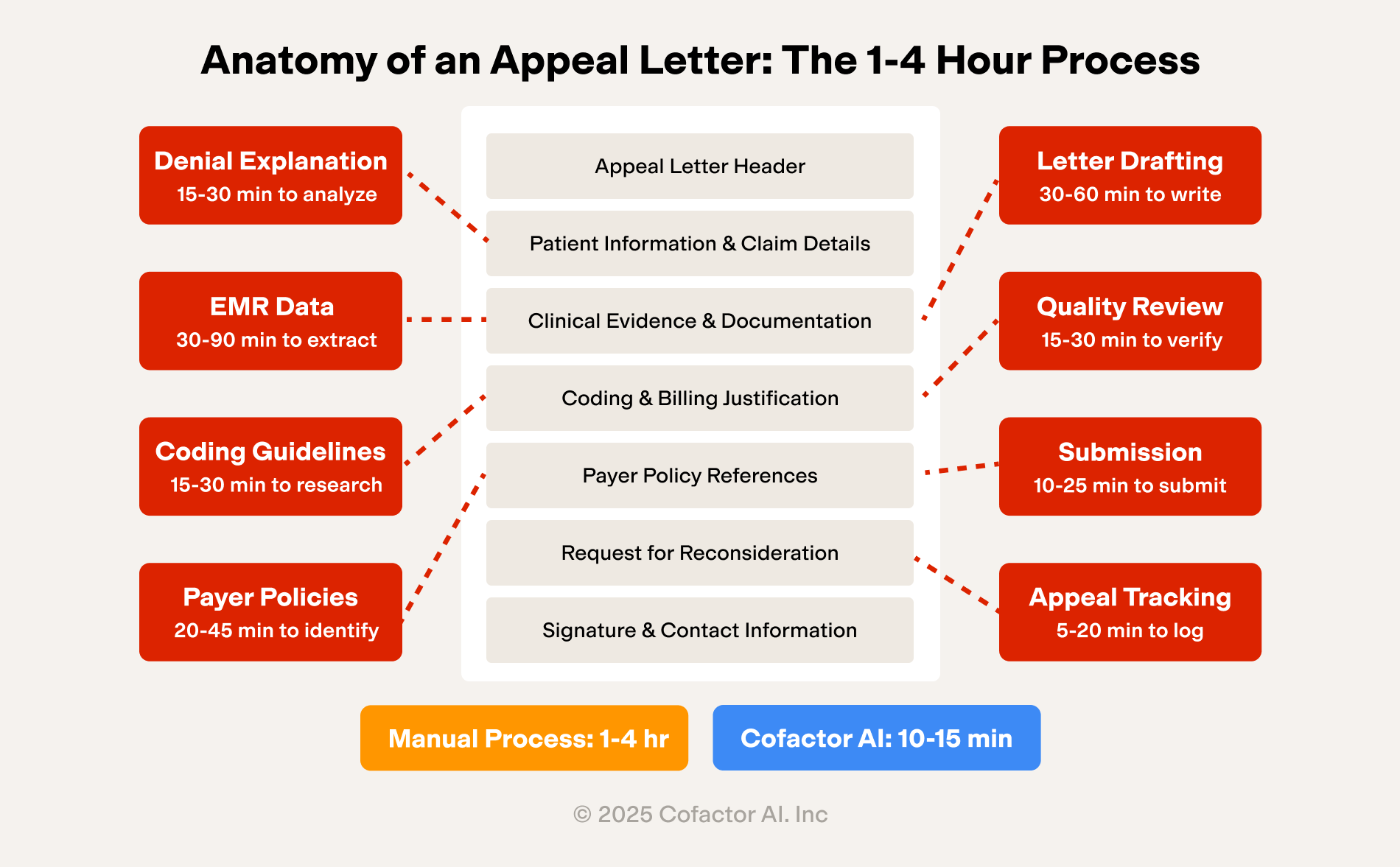
- Time investment: 1–4 hours per complex case
- Sepsis diagnosis downgrades alone: $5,316 average payment reduction
System-Wide Impact
- Hospital operating margins remain under 3%, leaving minimal room for revenue leakage
- Up to 10% of inpatient discharges affected by level-of-care changes
- Administrative burden: Healthcare providers spend billions annually on appeal efforts
In today's constrained financial environment, every denied dollar represents both immediate revenue loss and opportunity cost that health systems can't afford to ignore.
Why Traditional Approaches Can't Scale
Payers have dramatically increased their audit capacity through AI automation, creating an unprecedented challenge for healthcare providers.
Volume Mismatch: Payers run AI systems processing 24/7 at machine speed, while hospitals rely on human reviewers working 8-hour shifts with 1–4 hours per case.
Sophistication Gap: Payers deploy machine learning models trained on millions of cases, while hospitals depend on individual reviewers relying on personal experience and manual research.
The math is simple: you can't fight AI with manual processes and expect to win.
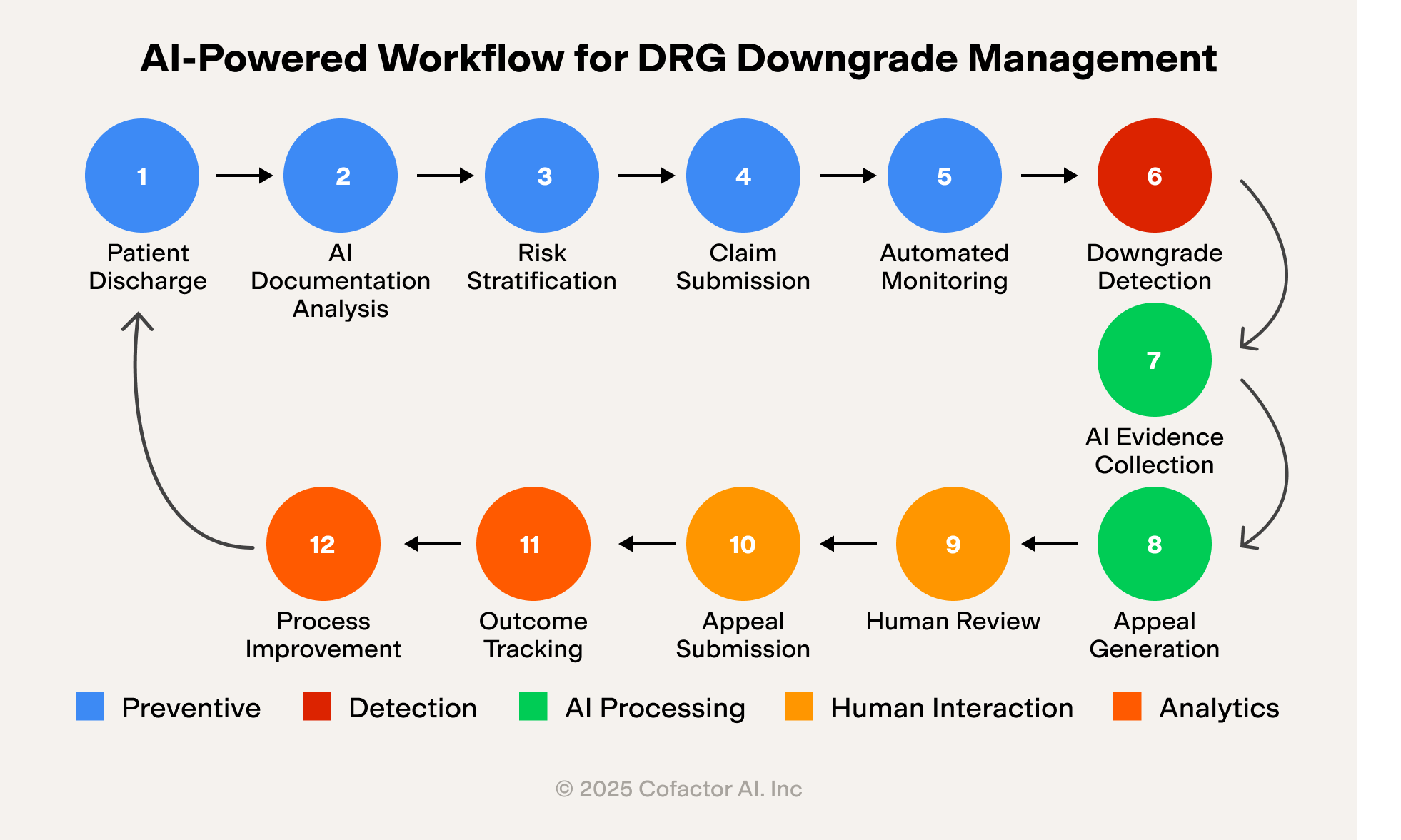
Use AI to Fight Back, Save Time, and Improve Over Time
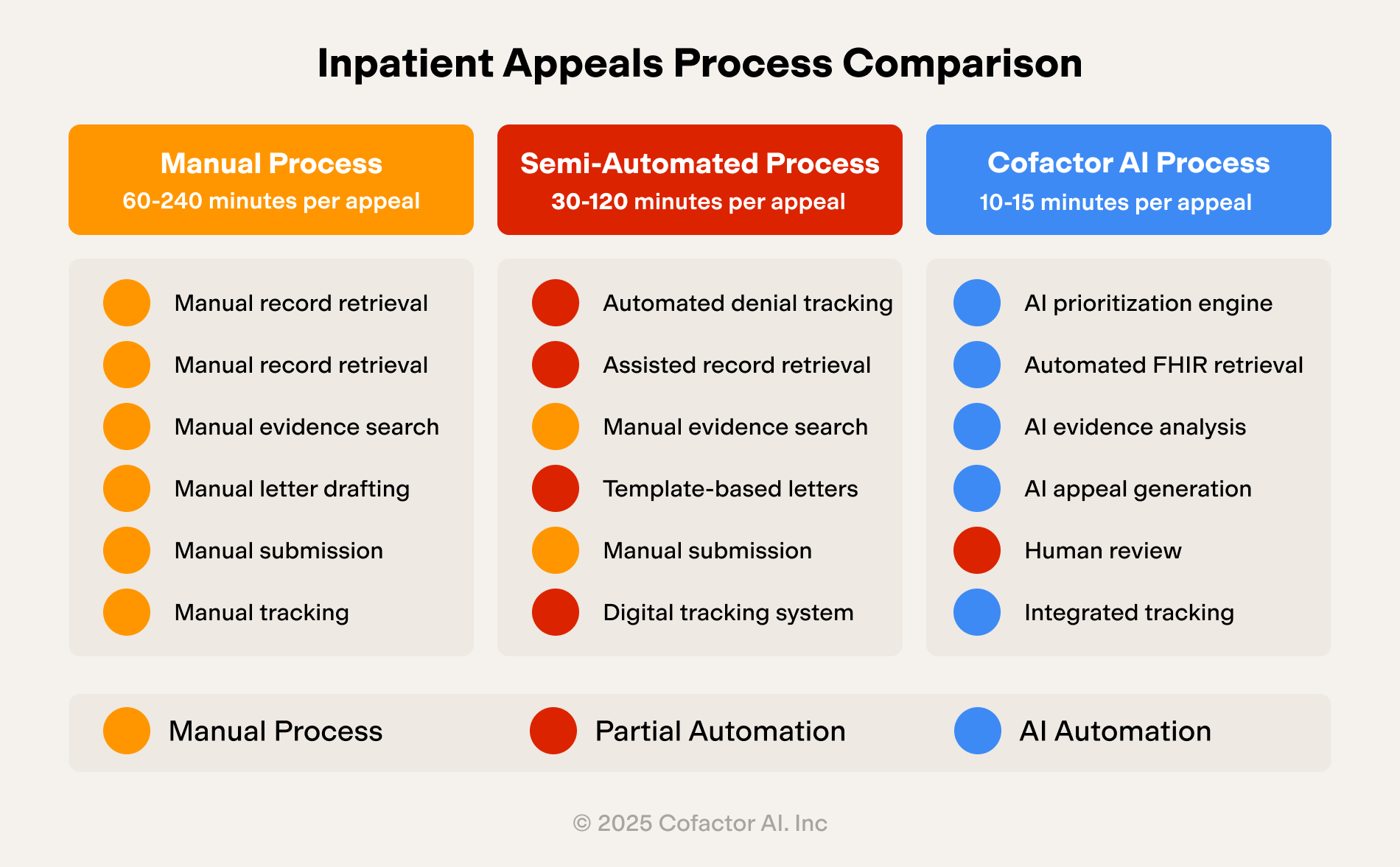
Leading organizations are implementing AI-powered workflows that reduce appeal generation time by 80–90% (from hours to minutes), enable a 3–4x increase in appeal volume with existing staff, improve success rates through evidence-based argumentation, and learn and adapt from each case to continuously improve outcomes.
2. Strategic Response Framework
The VP-Level Perspective: Beyond Individual Cases
Your role requires thinking beyond individual appeals to system-wide preparation.
Risk Stratification at Scale: High-risk DRGs include sepsis, respiratory failure, encephalopathy, and acute kidney injury. Watch for vulnerable documentation patterns like single-source diagnoses, late additions, and insufficient severity indicators. Track payer-specific triggers to see which payers target which conditions most aggressively.
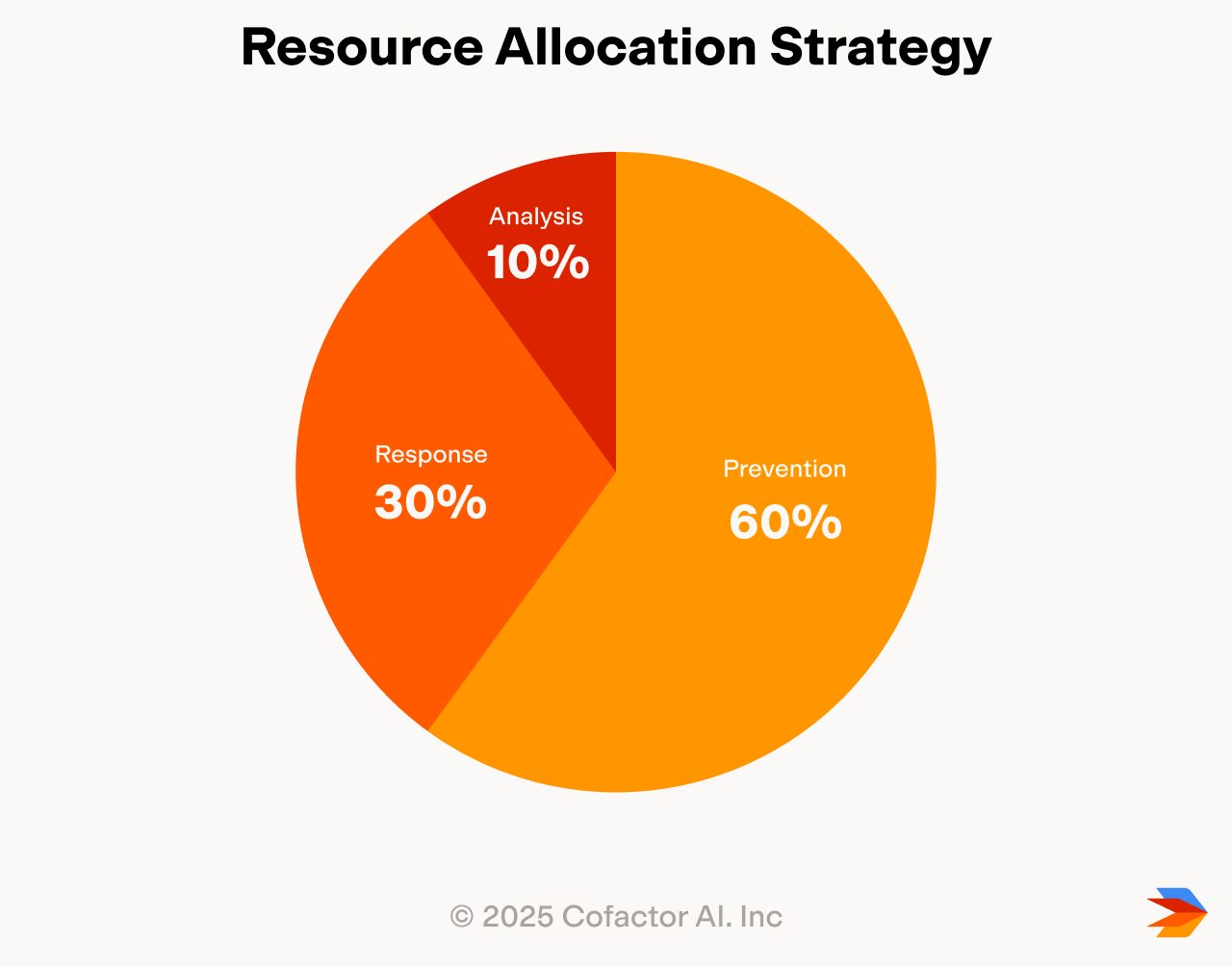
Resource Allocation Strategy: Based on our analysis of successful implementations, optimal resource allocation follows a 60% prevention (pre-bill reviews, CDI enhancement, real-time documentation improvement), 30% response (efficient appeal generation and submission processes), 10% analysis (performance tracking, trend identification, process improvement) model.
Technology Investment Priorities
Leading VPs are prioritizing investments in AI-powered documentation analysis systems that can review records at the speed and scale payers now employ, integrated appeal workflows that reduce appeal generation time from hours to minutes, predictive analytics tools that identify high-risk claims before submission, and performance dashboards with real-time visibility into denial patterns and team productivity.
3. Cross-Department Integration Excellence
Building Your Defense Coalition
Your success depends on aligning multiple departments toward common goals.
Clinical Documentation Integrity (CDI) Alignment: Link CDI performance to appeal success rates, create real-time feedback loops where appeal outcomes inform CDI education priorities, and use appeal data to demonstrate documentation impact to clinical staff. Leading health systems have demonstrated that targeted CDI interventions based on historical appeal patterns can reduce DRG downgrades by up to 30%.
Health Information Management (HIM) Coordination: Establish protocols ensuring uniform application of guidelines across coders, implement pre-bill coding reviews for high-risk cases, and provide regular updates on payer-specific coding preferences and policy changes.
Utilization Review Integration: Real-time alerts for procedure codes while patients are still in-house are critical for preventing write-offs, given the narrow window for intervention. This includes concurrent review protocols with daily evaluation of continued stay necessity, clear documentation escalation pathways, and proactive inpatient vs. observation status management.
Case Management Partnership: Coordinate medical necessity documentation with discharge planning, ensure clinical teams document factors supporting extended stays, and document efforts to prevent related readmissions.
4. Performance Excellence Through Strategic Metrics
Your success requires monitoring both operational efficiency and strategic outcomes.
Leading Indicators (Prevention Focus): Pre-bill review completion rate, documentation query response time, clean claim rate, and concurrent review coverage.
Operational Indicators (Process Efficiency): Appeal generation time (industry benchmark is 1–4 hours; leading organizations achieve 10–15 minutes), appeal submission timeline, team productivity, and quality scores.
Outcome Indicators (Financial Impact): Appeal success rate by denial type, financial recovery per appeal, cost per appeal, and net revenue impact.
Benchmarking: Top-quartile RCM teams using tech-enabled workflows see appeal success rates above 65%, average appeal generation time under 20 minutes, cost per appeal under $30, and pre-bill review rates above 80% for high-risk DRGs. Industry average sits at 50–54% success, 1–4 hours per appeal, ~$80–90+ cost per appeal, and under 30% pre-bill review rate.
5. Technology Investment Strategy for the AI Era
Leading VPs in revenue cycle management are strategically balancing technology investments with vendor expense reduction, particularly focusing on AI solutions that can reduce reliance on staffing-based outsourcing models.
Must-Have Capabilities: Integration with existing EHR systems, payer-specific policy integration, contract-aware processing, audit trail functionality, and scalability without proportional cost increases.
Nice-to-Have Features: Predictive analytics, automated submission, performance benchmarking, and training capabilities.
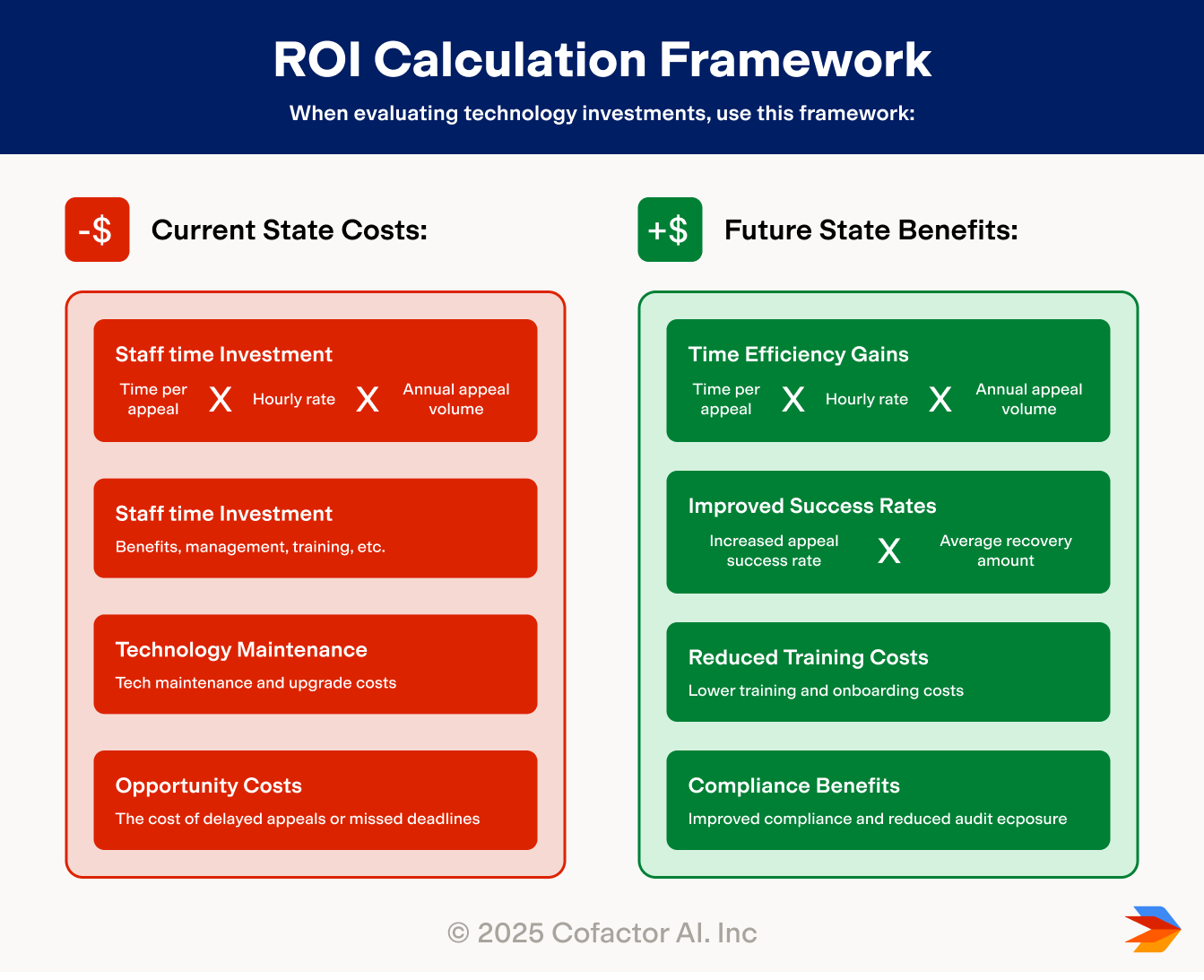
ROI Calculation Framework: Weigh current-state costs (staff time per appeal times hourly rate times annual volume, overhead, opportunity cost of delayed appeals, technology maintenance) against future-state benefits (time savings times volume times hourly rate, increased success rate times average recovery, reduced training costs, improved compliance).
Implementation Considerations: Based on client implementations, expect an 8–12 week integration timeline for full EHR integration, 2–3 weeks of staff training for full adoption, 3–6 months for ROI break-even, and dedicated customer success management for ongoing support.
6. Payer Relations and Contract Leverage
Your new AI-powered processes will generate unprecedented insights into payer behavior.
Payer Scorecards for Contract Negotiations: Track denial rates by payer, appeal overturn rates, time to adjudication, and policy consistency. Progressive health systems are leveraging appeal outcome data to demonstrate systematic payer behavior patterns, with some achieving contract amendments that reduce unnecessary denials by up to 40%.
Documentation Standards Alignment: Identify payer-specific documentation preferences, seasonal denial patterns, and policy interpretation variations.
Strategic Contract Amendments: Focus negotiations on extended appeal timeframes, burden of proof clauses, audit limitation provisions, and technology integration requirements.
Implementation Roadmap: From Assessment to Excellence
90-Day Quick-Start Plan: Month 1 covers current state analysis and stakeholder alignment across CDI, HIM, UR, and Case Management. Month 2 focuses on workflow redesign and staff development. Month 3 covers technology evaluation, selection, and implementation kickoff.
6-Month Strategic Transformation: Months 1–2 build the foundation with denial pattern analysis and governance structure. Months 3–4 deploy the AI-powered appeal platform and integrate with EHR and billing systems. Months 5–6 optimize processes, expand technology use, and negotiate contract improvements.
Annual Strategic Development: Q1 focuses on advanced analytics and payer scorecards. Q2 expands process automation. Q3 emphasizes strategic payer engagement and contract renegotiation. Q4 evaluates emerging technologies and plans for the year ahead.
3-Year Vision: Year 1 targets operational excellence and top-quartile appeal success rates. Year 2 builds strategic advantage through data-driven payer positioning. Year 3 establishes industry leadership through shared best practices and sustainable competitive advantages.
Conclusion: Building Your Competitive Advantage in the AI Audit Era
The new reality of AI-powered audits demands a strategic response. Organizations that continue fighting this battle with manual processes will watch their competitive position erode, while those implementing modern workflows establish sustainable advantages.
Cofactor's AI-powered platform addresses every challenge outlined in this guide: smart prioritization that automatically flags your highest-value DRG downgrades, evidence-based appeals built in minutes incorporating payer policies and clinical guidelines, cross-department integration with your EMR and existing workflows, performance analytics for data-driven decisions, and proven ROI with customers achieving 80–90% time savings and 3–4x appeal volume capacity with existing staff.
The new reality of AI-powered audits is here. Organizations that prepare now will not only survive the increased scrutiny, they'll use it as a competitive advantage to outperform their peers.
.svg)