
Introduction
Recent data from the American Hospital Association reveals that between 2022 and 2023, Medicare Advantage claim denials increased by a staggering 55.7%, representing billions in contested revenue for U.S. hospitals (AHA, September 2024). With hospital operating margins hovering at just 2.5%, DRG downgrades represent a significant threat to financial sustainability. This guide provides hospital administrators with a practical, step-by-step approach to identify, prevent, and combat DRG downgrades using artificial intelligence and strategic operational improvements.
Understanding DRG Downgrades: The Silent Revenue Drain
Diagnosis-Related Group (DRG) downgrades occur when payers retrospectively review inpatient claims and determine that a lower-weighted DRG should have been assigned, resulting in reduced reimbursement. Unlike outright denials, these often appear as post-payment adjustments, making them particularly insidious, your hospital may not realize revenue is being reclaimed until it's too late.
Key DRG Downgrade Metrics Every Administrator Should Track
- Downgrade Rate: Percentage of inpatient claims that receive DRG downgrades
- According to data from Ballad Health shared by Ascendient Healthcare Advisors, up to 10% of inpatient discharges are affected by "level of care changes" including DRG downgrades (Ascendient, 2023).
- Financial Impact Rate: Average dollar value lost per downgraded claim
- Downgrading a pneumonia with sepsis case to simple pneumonia can result in payment reductions of approximately $5,316 per case (Ascendient, 2023).
- Sound Physicians reports that overturning a sepsis diagnosis downgrade to a localized infection can recover between $3,000 and $7,000 per claim (Sound Physicians, November 2024).
- Recovery Rate: Percentage of downgrades successfully overturned through appeals
- A 2024 survey by Premier Inc. found that 54% of private payer denials are eventually overturned, though often only after multiple costly appeal attempts (Premier Inc., 2024).
- Different payer types show varying overturn rates: private commercial payers overturn over 60% of initial denials, Medicare and Managed Medicaid overturn about 50%, and traditional Medicaid overturn about 46% (TechTarget, 2024).
- Administrative Cost: Cost to process each appeal
- A recent healthcare industry analysis reveals that providers spend nearly $44 on each appeal, which equates to almost $20 billion annually across the healthcare system (AHA, April 2024).
- Secondary Impact: Long-term effects beyond the immediate financial loss
- Repeated DRG downgrades can lower a hospital's case mix index (CMI), which is used in setting prospective payments and can reduce reimbursement levels for years to come (Ascendient, 2023).
Common Types of DRG Downgrades and Their Prevalence
Understanding the most frequent downgrade scenarios helps focus prevention efforts:
- Clinical Validation Downgrades These occur when payers challenge the clinical evidence supporting specific diagnoses. According to recent healthcare data, the most frequently targeted conditions include sepsis, acute respiratory failure (J96), acute kidney injury (N17), severe malnutrition (E43), and type 2 myocardial infarction (I21.A1) (The Hospitalist, September 2024). These diagnoses significantly impact DRG weights and are often subject to differing clinical criteria interpretations between providers and payers.
- Principal Diagnosis Resequencing Payers rearrange the sequencing of diagnoses to achieve a lower-weighted DRG, often claiming the documented principal diagnosis was a symptom rather than the underlying condition. For example, a patient admitted with both sepsis and pneumonia may have the pneumonia recategorized as the principal diagnosis, resulting in a significant payment reduction.
- Severity of Illness Downgrades Challenges to complication and comorbidity (CC) or major complication and comorbidity (MCC) classifications that reduce the severity level and corresponding payment. According to CMS data, the presence of an MCC in a case is a stronger indicator of resource use than the specific principal diagnosis or procedure (NCBI, 2020), making these high-value targets for payer scrutiny.
- Insufficient Documentation Downgrades Claims where documentation lacks specificity or fails to support the medical necessity for the inpatient level of care. Sound Physicians notes that secondary diagnoses with only one documented complication or comorbidity are particularly vulnerable to downgrades (Sound Physicians, November 2024).
Leveraging AI for DRG Downgrade Prevention and Response
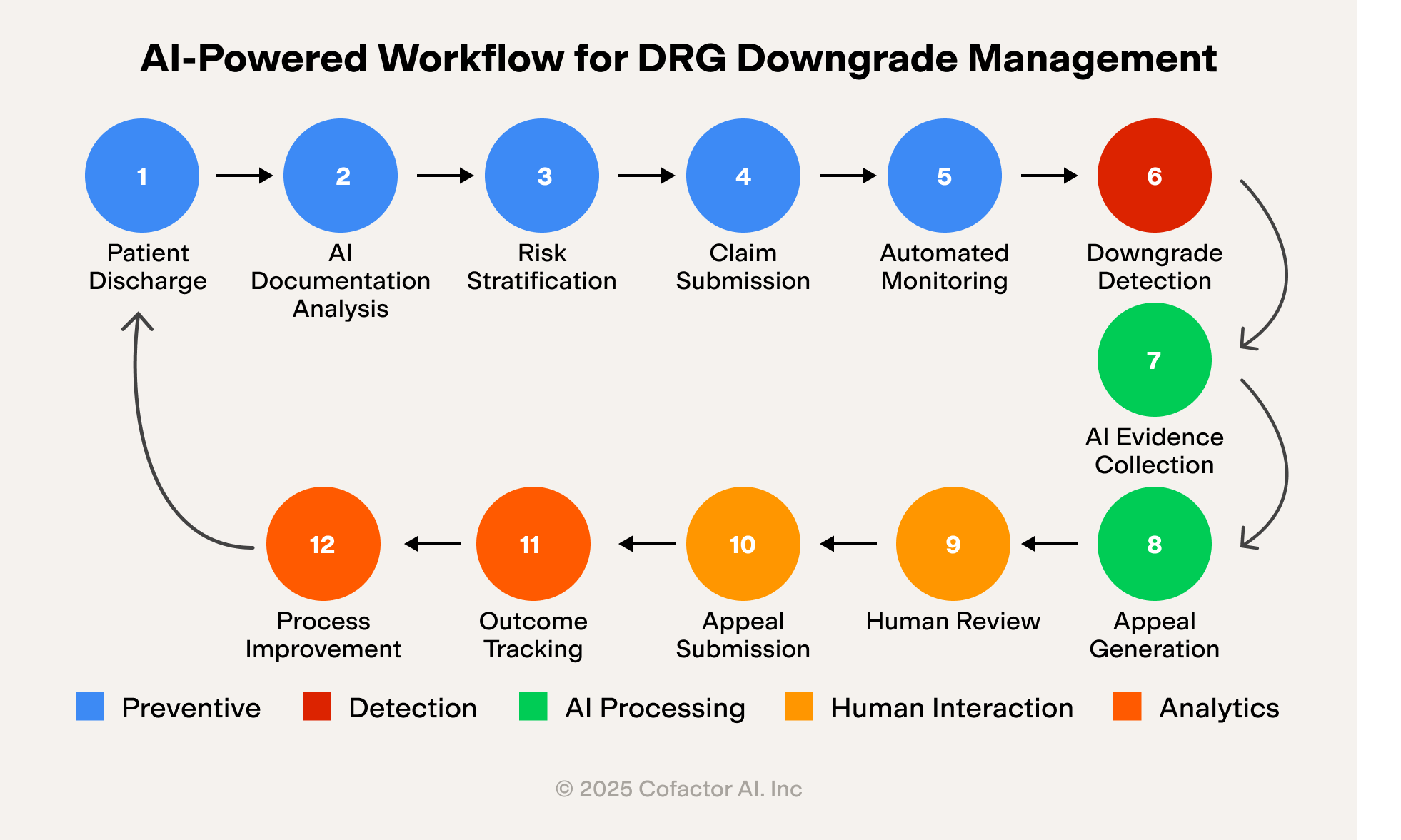
1. Predictive Analysis and Risk Stratification
Deploy AI to analyze historical downgrade patterns by payer, service line, and DRG, develop risk scores for current inpatient stays, and create real-time alerts for high-risk cases before claim submission. Hospital systems implementing predictive analytics can identify which cases are at highest risk, allowing CDI specialists to focus resources before submission.
2. Documentation Gap Analysis
Use natural language processing to analyze clinical notes against coding requirements, identify documentation patterns that frequently lead to downgrades, and generate physician-specific education opportunities. AI systems can scan thousands of records in minutes to flag potential documentation gaps before submission.
3. Automated Evidence Collection for Appeals
Implement AI that can rapidly search the entire medical record for clinical evidence, automatically extract relevant documentation for appeals, and prioritize appeals based on likelihood of success and financial impact. Leading health systems are using AI to automate appeals for bulk denials from a single payer, allowing staff to focus on cases with the highest potential return.
4. Payer Behavior Pattern Recognition
Use AI analytics to identify payer-specific denial patterns, develop targeted documentation strategies for high-risk DRGs by payer, and establish benchmark metrics to identify anomalous behavior. Analysis might reveal that certain payers consistently challenge specific diagnoses, allowing hospitals to strengthen documentation for those conditions in advance.
Optimizing Team Structure and Workflows
Build a cross-functional downgrade defense team including dedicated clinical documentation specialists with DRG expertise, physician advisors with specialty-specific knowledge, certified coders, revenue cycle specialists focused on payer policies, and data analysts to monitor trends. Hold weekly case review meetings, establish clear escalation paths for physician queries, and develop payer-specific response protocols.
Key workflow integration points include pre-discharge documentation checkpoints for high-risk DRGs, coding validation review for AI-flagged cases, post-discharge query opportunities before claim submission, and post-payment review triggering automated evidence collection. Some providers tag accounts with heavily scrutinized diagnosis codes for review before billing to catch issues before submission.
Staff Education and Training Approaches
For physicians: specialty-specific documentation requirements, interactive case studies showing documentation gaps, and quick reference guides for commonly challenged diagnoses. For CDI specialists: advanced training on payer-specific clinical validation criteria and query development skills. For coders: advanced DRG optimization within compliance guidelines and payer-specific coding guidance.
Use AI to analyze downgrade patterns by physician, service line, and diagnosis to develop targeted, data-driven education. Some organizations have CDI specialists attend monthly physician staff meetings to explain where inappropriate downgrades occur and share prevention strategies.
Current Industry Trends in DRG Downgrade Management
The most forward-thinking organizations are shifting from reactive appeals to proactive validation, implementing AI-powered pre-bill reviews that catch documentation gaps before claims are processed. Advanced health systems are developing payer-specific documentation templates guided by AI analysis of historical patterns. Several health systems have formed collaborative networks to share anonymized downgrade data, helping identify emerging payer tactics across organizations. The most significant advancement is AI systems that can automatically generate comprehensive appeal letters, reducing appeal creation time from hours to minutes while increasing success rates.
How Cofactor Transforms DRG Downgrade Management
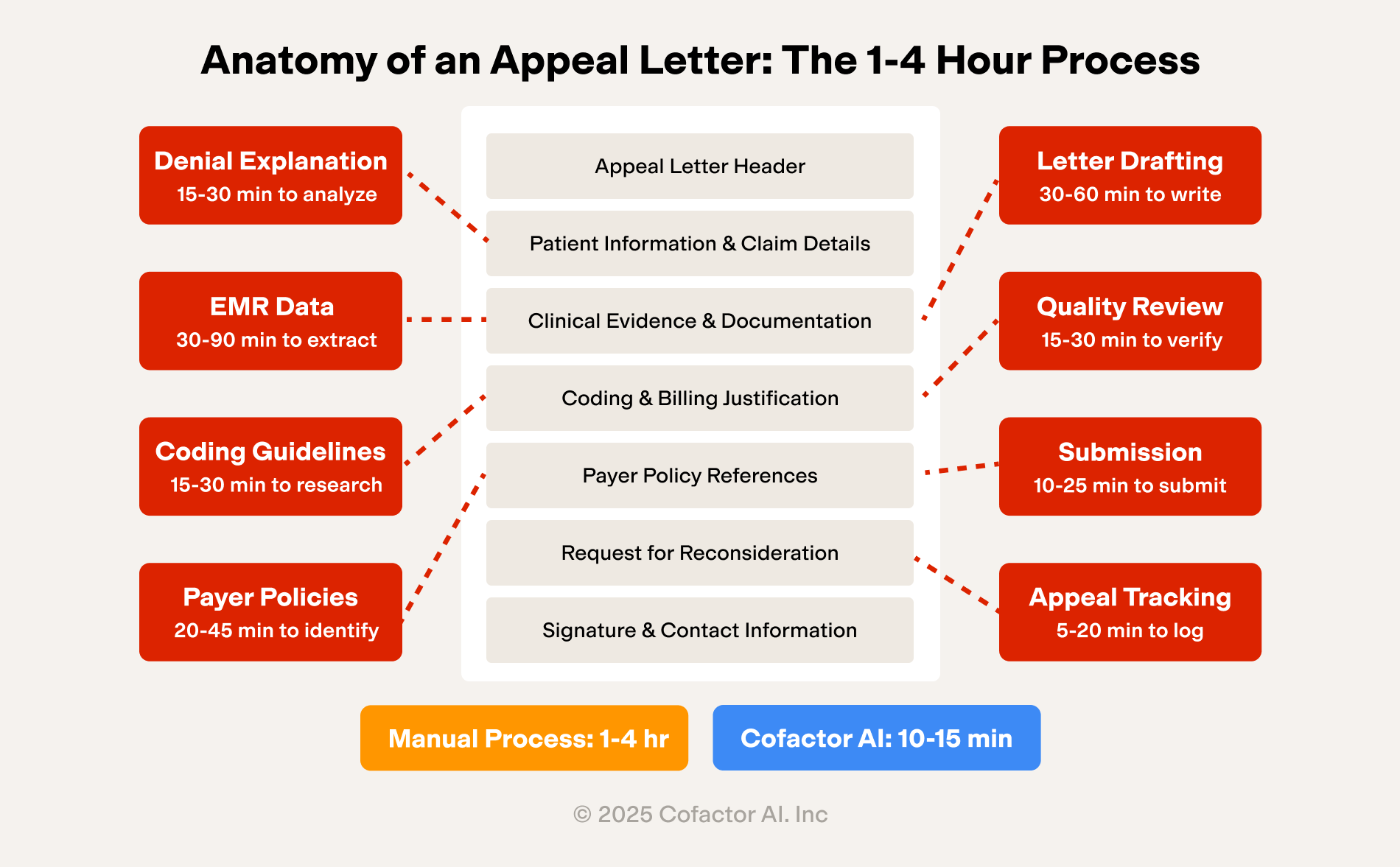
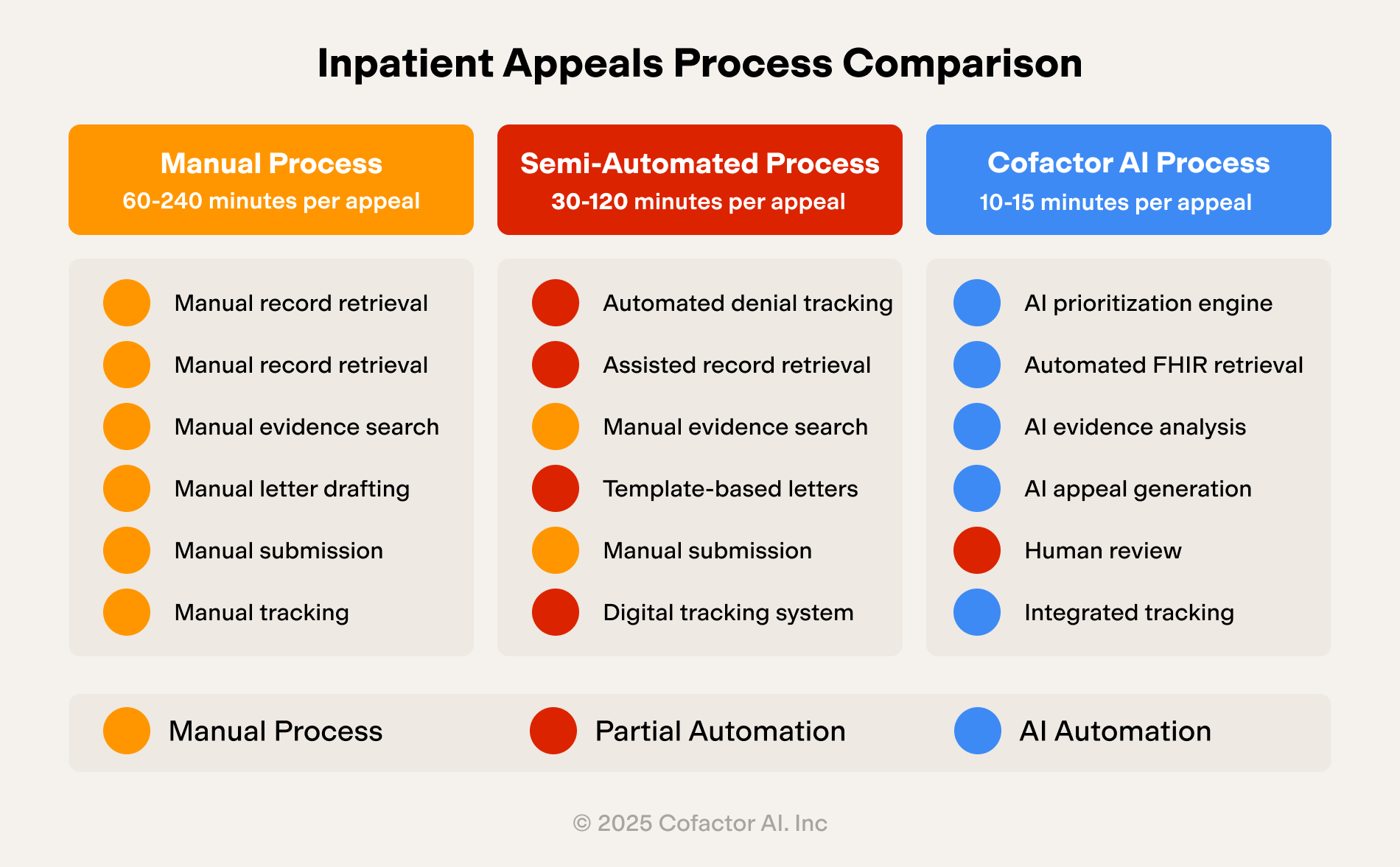
Cofactor's AI analyzes the complete medical record to identify all relevant clinical evidence supporting the originally coded DRG, automatically compiling it into a comprehensive appeal letter and transforming what typically takes 1–4 hours per case into a 10–15 minute review process.
Our system continuously analyzes patterns in payer behavior, identifying emerging downgrade trends before they become widespread, allowing targeted documentation improvements that protect revenue before downgrades occur. Hospitals using Cofactor's predictive analytics have reduced downgrade rates by up to 30% for high-risk DRGs.
Cofactor integrates with your existing EMR and clearinghouse systems, automatically prioritizing downgrade cases based on financial impact, appeal deadline, and likelihood of success. Hospitals implementing Cofactor's technology typically experience an 80–90% reduction in time spent creating downgrade appeals, the ability to process 3–4 times more appeals with existing staff, and substantial ROI in cost-to-appeal savings.
Conclusion
DRG downgrades represent a significant but often underaddressed threat to hospital financial performance. By implementing AI-powered solutions, healthcare organizations can dramatically improve their ability to identify, prevent, and combat these revenue challenges. The result is not only improved financial performance but also reduced administrative burden, allowing clinical and revenue cycle staff to focus on their core mission of providing exceptional patient care.

.svg)