
According to Experian Health's 2024 State of Claims report, a staggering 73% of healthcare providers report that claim denials are increasing, while 67% feel it's taking longer to get paid. These rising denial rates represent a significant financial challenge, with hospitals spending an estimated $19.7 billion in 2022 trying to overturn denied claims, according to the American Hospital Association. For hospital administrators, developing a strategic approach to appealing inpatient denials at scale has become essential for financial sustainability.
This comprehensive guide provides practical, step-by-step strategies for hospital administrators to improve their denial management processes, particularly for complex inpatient denials such as medical necessity and DRG downgrades.
Key Stakeholders and Their Priorities
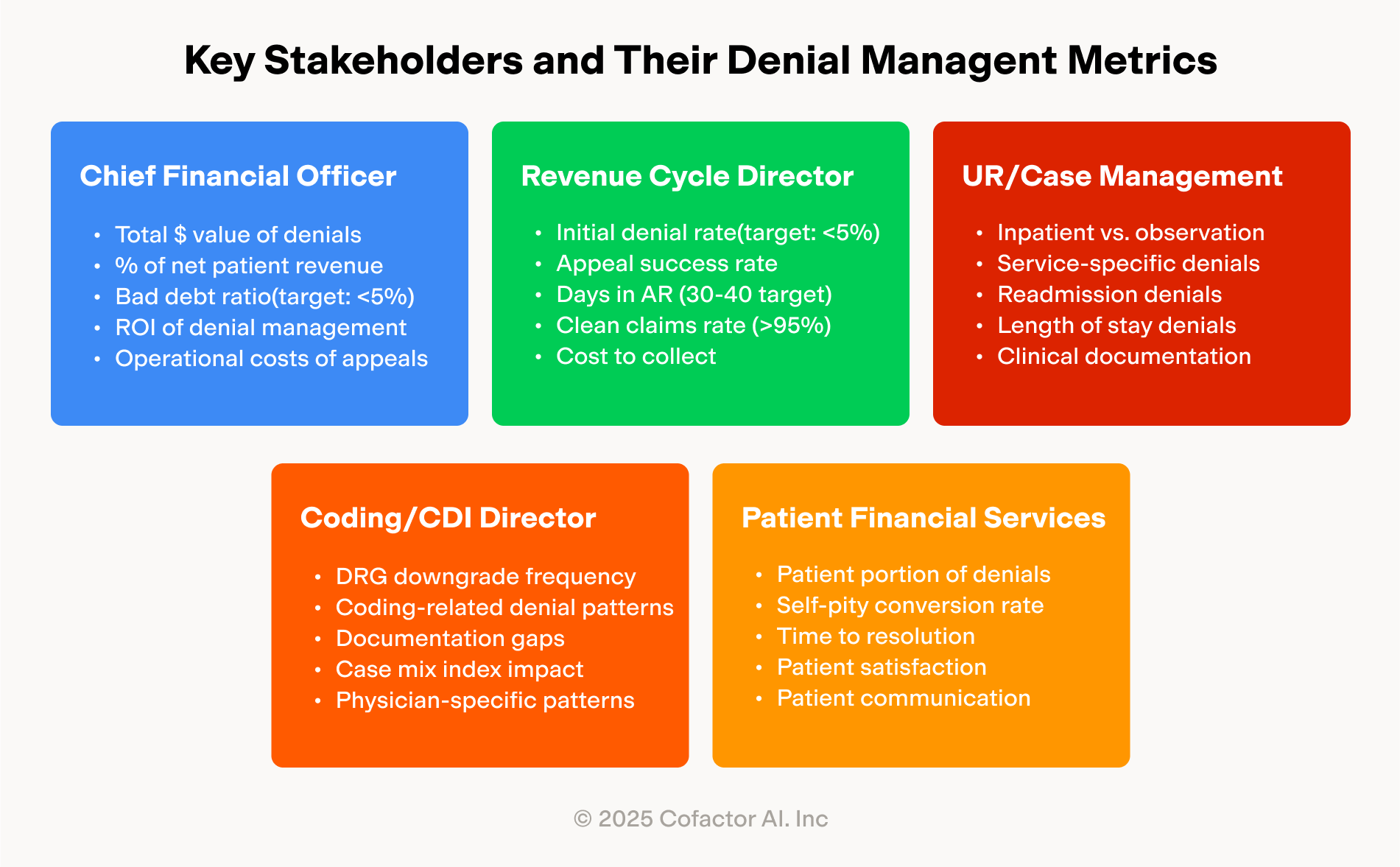
Different stakeholders within a healthcare organization evaluate denial management from unique perspectives. Understanding these viewpoints is crucial for creating an effective, organization-wide approach.
Chief Financial Officer (CFO): Primarily concerned with overall financial impact, monitoring total dollar value of denials and appeals as a percentage of net patient revenue, cash collection as a percentage of net patient service revenue (target: 100%), bad debt ratio (target: under 5%), ROI for denial management initiatives, and operational costs of appeals processing.
Revenue Cycle Director/VP: Focuses on operational efficiency, prioritizing initial denial rate (industry average 5–10%, target under 5%), denial appeal rate, appeal success rate by denial type and payer, days in accounts receivable (target 30–40 days), clean claims rate (target over 95%), and cost to collect.
Utilization Review/Case Management Director: Concentrates on clinical documentation and medical necessity, evaluating inpatient vs. observation status denial rates, service-specific denial patterns, readmission denials, length of stay denials, and physician-specific denial rates.
Coding and CDI Director: Focuses on coding accuracy, monitoring DRG downgrade frequency by service line, coding-related denial patterns, documentation gaps by physician or service, and case mix index impact from denials.
Patient Financial Services Director: Concerned with patient financial experience, tracking patient portion of denied claims, self-pay conversion rate after denials, time to resolution for patient-impacting denials, and patient satisfaction metrics related to billing.
Root Cause Analysis Techniques for Claim Denials
Implement denial classification systems: Categorize denials by type (medical necessity, DRG downgrades, authorization issues), payer, service line, and dollar amount to identify patterns and prioritize high-impact areas.
Track denial rates by physician and service: Monitor denial rates across different providers and service lines to identify specific areas needing documentation or coding improvement.
Analyze payer behavior patterns: Document which payers regularly downgrade specific DRGs or deny particular types of admissions. A Premier Inc. survey found that nearly 15% of all claims submitted to private payers are initially denied, but patterns often exist within these denials.
Conduct regular chart audits: Perform targeted reviews of denied claims to identify documentation gaps or patterns that may be contributing to denials.
Leverage data analytics tools: Implement technology solutions that can detect denial trends and provide actionable insights for process improvement.
Team Structure Optimization
Create a specialized denials management team focused solely on managing and appealing denials. Include clinical expertise, since having a physician advisor on the team is considered a best practice according to HFMA. Incorporate certified coders with expertise in inpatient coding guidelines and DRG assignment. Establish clear roles and workflows, and implement accountability metrics like appeal success rates and turnaround times.
Technology Integration Strategies
Implement denial management software that tracks, prioritizes, and manages denials throughout the appeal process. Automate denial identification and routing. Utilize AI-powered appeals generation, since a study reported by Healthcare IT News found that organizations using AI for appeals processing handle denials three times faster than manual methods. Integrate with EMR systems to streamline documentation retrieval, and develop payer-specific templates addressing common denial reasons.
Staff Training Approaches
Provide specialized coding education on inpatient guidelines, with emphasis on areas frequently targeted for DRG downgrades. Develop clinical documentation improvement programs. Conduct payer policy education so team members understand specific requirements for inpatient admissions and DRG validation. Implement peer learning sessions reviewing successful appeals, and support staff in obtaining professional certifications.
Performance Measurement Frameworks
Track appeal success rates by denial type, payer, and dollar amount. Measure financial impact by calculating revenue recovered versus the cost of the appeals process. Monitor appeal turnaround times to ensure timely filing. Analyze root cause resolution to evaluate whether denial patterns are being effectively addressed, and implement regular reporting dashboards for real-time visibility.
Current Industry Trends in Denial Management
Healthcare providers are increasingly turning to AI to combat rising denial rates, with over half of surveyed providers now leveraging AI-driven claims management software (Experian Health, 2024). At the same time, a February 2025 AMA survey found 61% of physicians are concerned that health plans' use of AI is increasing prior authorization denials, meaning providers must also adopt sophisticated tools to level the playing field. DRG downgrades have become increasingly common, with providers seeing a 15% to 20% average increase in clinical denials (HFMA, 2023). A strategic shift toward preventing denials rather than just appealing them is also gaining traction.
How Cofactor Helps Streamline Inpatient Denial Appeals
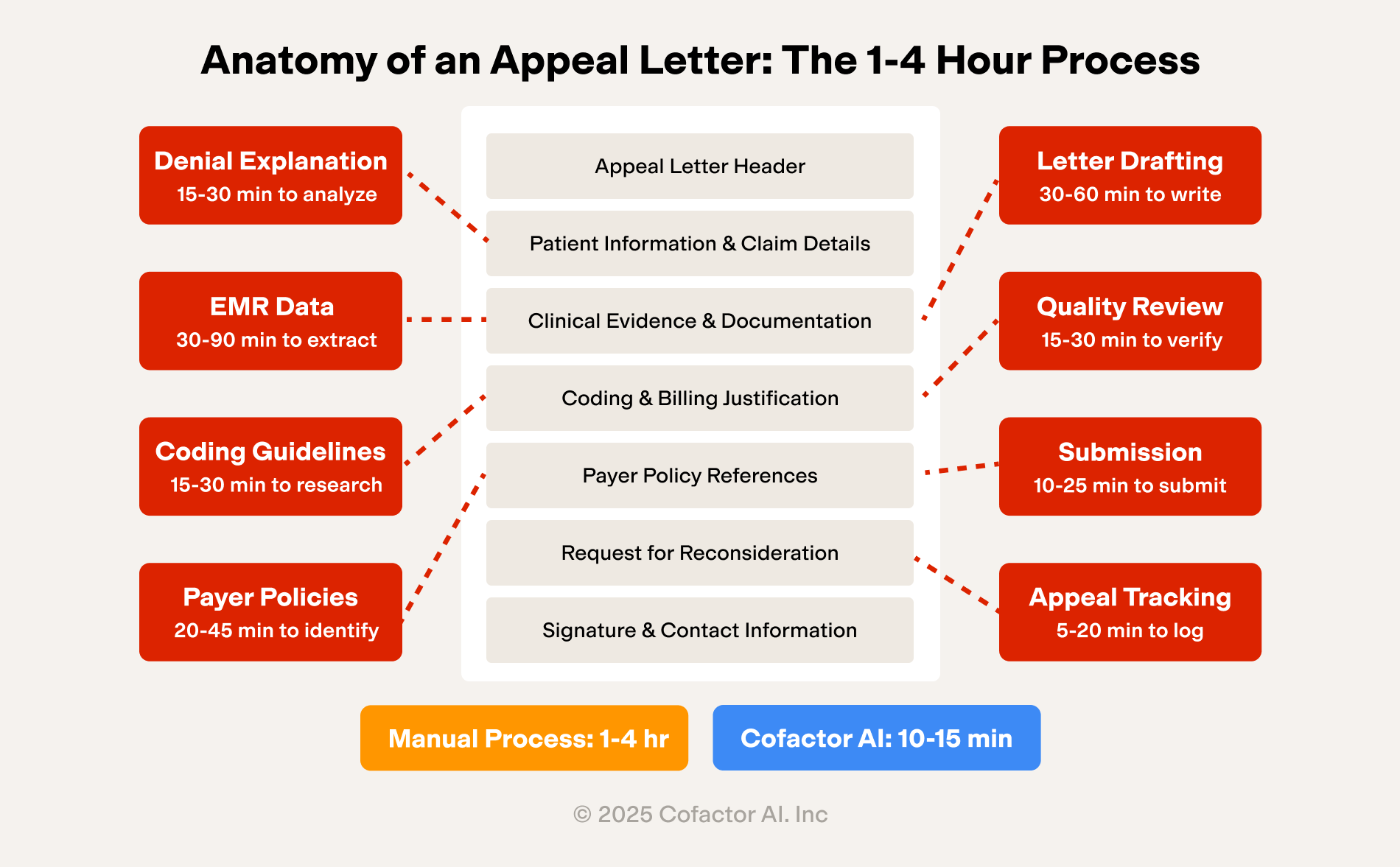
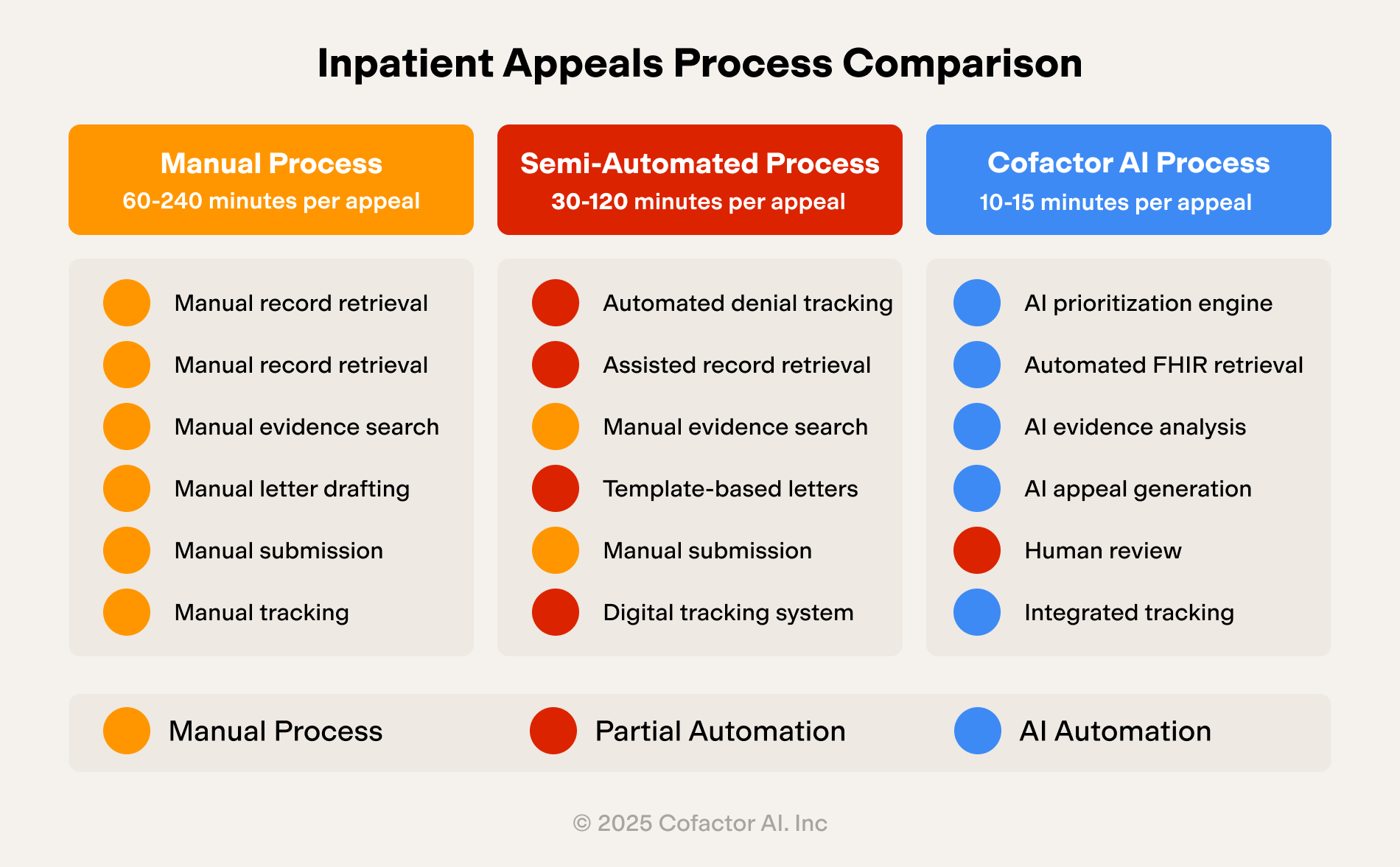
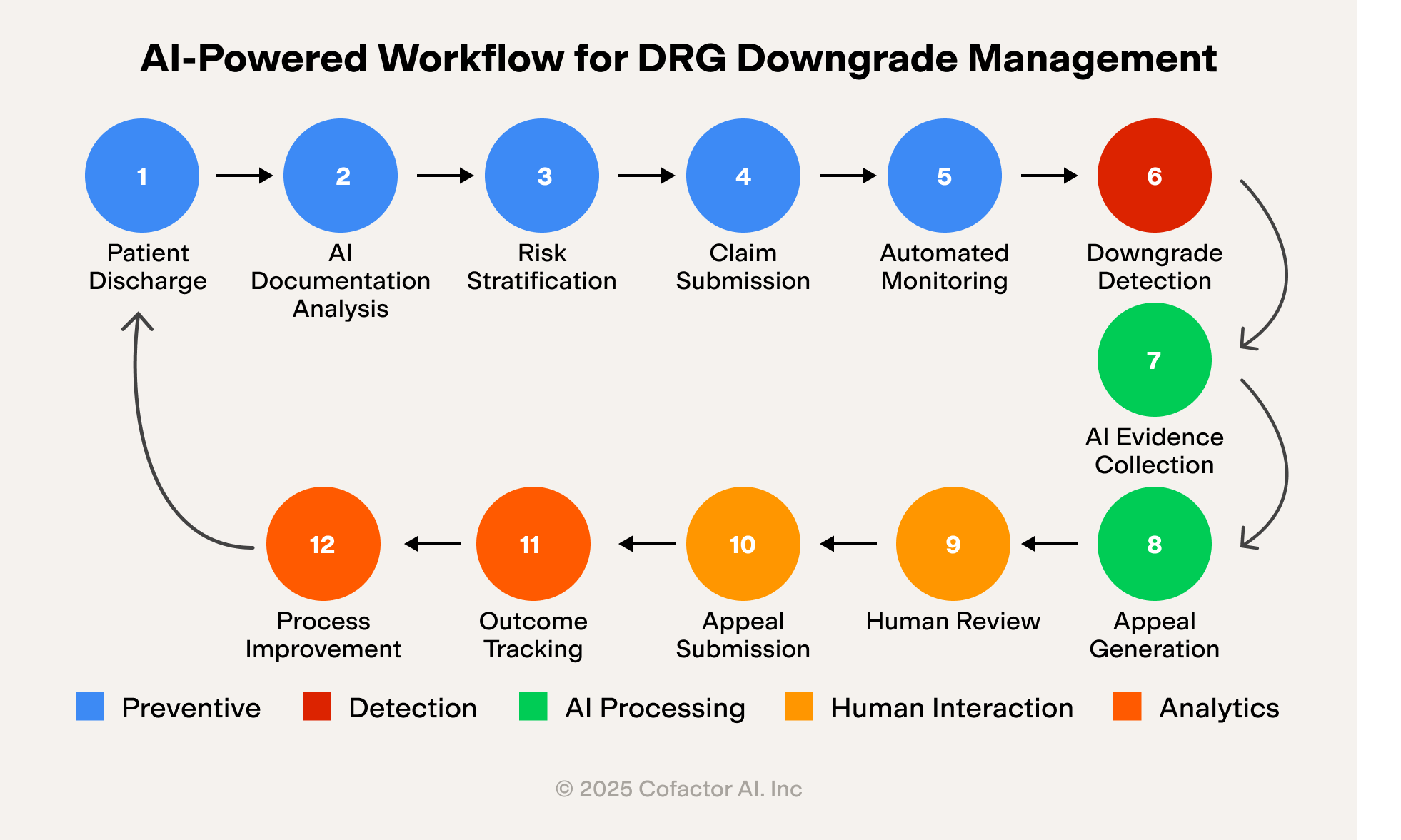
Cofactor's platform generates comprehensive appeal letters incorporating relevant clinical evidence, appropriate citations, and compelling justification tailored to the specific denial reason, transforming what typically takes 1–4 hours per appeal into a process requiring just 10–15 minutes of staff time.
Cofactor's system analyzes denial patterns to identify root causes and provides actionable insights to prevent future denials, helping protect revenue before it's at risk. The platform automatically retrieves relevant clinical documentation through FHIR integration with your EMR, eliminating manual record searching and reducing the cost to collect.
Cofactor's intelligent prioritization engine evaluates denials based on financial impact, appeal deadline, and likelihood of overturn, ensuring your team focuses on appeals with the highest potential return, helping overturn complex clinical denials that would otherwise be difficult to address.
Conclusion: Transform Your Hospital's Denial Appeal Strategy
As denial rates continue to rise, hospitals must evolve from manual, reactive approaches to strategic, technology-enabled denial management processes. By implementing robust root cause analysis techniques, optimizing team structures, integrating advanced technologies, providing targeted staff training, and measuring performance effectively, healthcare organizations can successfully appeal inpatient denials at scale.
The right combination of people, processes, and technology can transform denial management from a drain on resources into a strategic advantage that protects revenue, reduces administrative burden, and ultimately supports the organization's mission of providing quality patient care.



.svg)