
According to recent data, Recovery Audit Contractors (RACs) recovered over $2 billion in improper payments in FY 2021 alone, creating a significant financial burden for healthcare providers already operating on thin margins (Auditec Solutions, 2024). What makes these audits particularly challenging is their post-payment nature—they target revenue that has already been accounted for and often spent, forcing hospitals to unexpectedly return funds they believed were secured. In today's healthcare environment, where many facilities have seen their average days cash on hand plummet to a 10-year low of just 196.8 days (with lower-performing hospitals averaging only 128 days) and median operating margins struggling at the 4-5% range, these unexpected recoupments can push vulnerable institutions toward financial collapse (Becker's Hospital Review, 2024).
Understanding the RAC Audit Process and Its Financial Impact
How RAC Audits Work
RAC audits are not random reviews but a systematic examination of past Medicare claims designed to identify improper payments. Here's how the process unfolds:
- Initiation: RACs, which are private companies contracted by the Centers for Medicare & Medicaid Services (CMS), use data mining software to identify potential payment errors in previously paid claims.
- Selection and Request: When potential discrepancies are identified, RACs issue Additional Documentation Requests (ADRs) to hospitals, requesting medical records for specific claims. Providers have 45 days to respond.
- Review Process: RACs conduct automated reviews (system-level analysis needing no additional documentation) and complex reviews (detailed examination of medical records by clinicians and certified coders).
- Determination and Demand: If an improper payment is identified, RACs issue a demand letter for recoupment, requiring hospitals to either pay within 30 days or face automatic deduction from future Medicare payments.
- Appeal Options: Providers have 120 days to file a RAC audit appeal, but must do so within 30 days of receiving the demand letter to prevent immediate recoupment.
What makes these audits particularly disruptive is their post-payment nature. Unlike pre-payment reviews that withhold funds before they reach the hospital, RAC audits target revenue that has already been received, recorded, and typically spent on operations.
Types of Claims Typically Audited
RACs specifically target medical necessity issues (services deemed not medically necessary or provided in an inappropriate setting), coding errors (incorrect codes resulting in higher reimbursement), documentation deficiencies (missing or incomplete documentation), DRG validation (ensuring the DRG accurately reflects the patient's condition), and duplicate billing.
Key Metrics to Monitor
- Denial Rate: The percentage of claims denied by RACs, measured both by account volume and dollar amount.
- Appeal Success Rate: Hospitals can achieve significant success when appealing RAC denials, with rates reaching 75% for certain types of cases (Applied Policy, 2023).
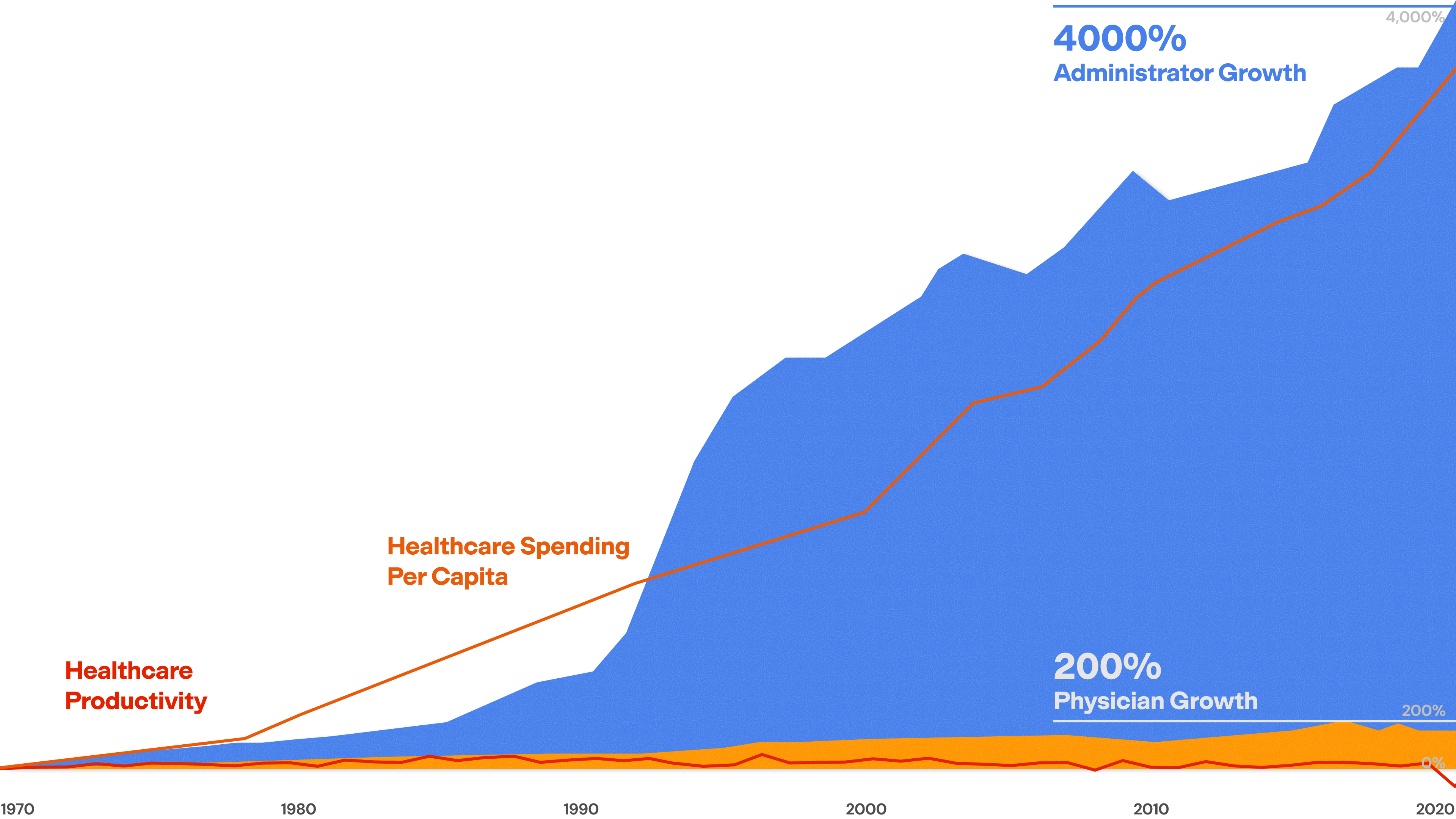
- Administrative Cost Per Audit: Hospitals spend hundreds of thousands of dollars annually, sometimes millions, on RAC appeals, audits, and denials.
- Cash Flow Impact: Hospitals saw median days-cash-on-hand decrease from 173 to 124 days between January 2022 and June 2023.
- Response Time: The average time taken to respond to RAC requests, which affects both compliance and potential for technical denials.
How RAC Audits Affect Hospital Financial Stability
1. Disruption of Cash Flow and Budgeting
When RACs recover payments for claims that may be up to three years old, they create significant cash flow disruptions. The median operating margin for hospitals reached just 4.4% in October 2024, leaving little room for unexpected financial demands.
2. Compounding Effect on Struggling Facilities
The impact is particularly severe for already-vulnerable hospitals. Currently, over 700 rural hospitals face the risk of closure, including more than 300 hospitals at risk within the next three years (Advisory Board, 2025). For these institutions, unexpected recoupment demands can act as the final financial straw.
3. Administrative Burden and Resource Diversion
Responding to RAC audits requires significant administrative resources, diverting staff time away from patient care and other critical functions.
4. Long-term Financial Planning Uncertainty
The three-year lookback period for RAC audits creates prolonged uncertainty in financial planning, since revenue recognized years ago may suddenly be reclaimed.
Root Cause Analysis Techniques
Understanding why denials occur is essential for RAC denial prevention. Begin by categorizing denials based on common patterns. Historically, medical necessity denials have represented the most costly complex denials, with a significant percentage reported because care was provided in the "wrong setting," not because the care wasn't medically necessary.
For each denial category, trace the process backward to identify the point of failure: documentation inadequacies, coding inconsistencies, clinical decision-making processes, communication breakdowns between departments, or technology limitations. Create a cross-functional denial management team representing clinical, coding, billing, and compliance departments to review high-value denials and develop corrective action plans.
Team Structure Optimization
Dedicated RAC Response Team
Establish a specialized team including a RAC coordinator, clinical documentation specialists, certified coders with expertise in RAC focus areas, financial analysts, and legal counsel familiar with healthcare regulations. Hospitals with dedicated RAC response teams achieve higher appeal success rates and experience less disruption to normal operations.
Cross-Departmental Collaboration Framework
Develop clear communication channels between departments involved in the audit process, and implement a structured workflow that defines responsibilities and timelines for each step, from receiving record requests to filing appeals.
Technology Integration Strategies
Audit Management Software: Invest in specialized software that tracks record requests, denials, and appeals, providing real-time visibility and automating documentation and follow-up.
Predictive Analytics: Implement analytics that identify potential denial risks before claims are submitted, flagging claims that share characteristics with previously denied claims.
Electronic Health Record Integration: Ensure your EHR captures documentation necessary to support medical necessity and coding decisions, with custom templates guiding clinicians for high-risk services.
Staff Training Approaches
Clinical Documentation Improvement: Train clinicians on documentation requirements specific to RAC focus areas, including medical necessity documentation, appropriate level of care determination, and complete procedural documentation.
Coding Accuracy: Provide regular updates on RAC target areas and coding guideline changes.
Appeal Writing Skills: Teach staff to construct effective appeal letters addressing the specific denial reason with appropriate supporting evidence, rather than generic templates.
Performance Measurement Frameworks
Monitor overall denial rate by dollar value and volume, appeal success rate by denial type, average resolution time, administrative cost per audit, and staff productivity metrics on a monthly basis. Conduct regular internal audits mirroring RAC focus areas, and benchmark performance against industry data from HFMA and the American Hospital Association.
Current Industry Trends in RAC Audit Management
1. Shift to Preventative Strategies
According to HFMA, 90 percent of all denials are preventable, and two-thirds of those preventable denials can be successfully appealed. This preventative approach has proven more cost-effective, especially considering hospitals and health systems expended approximately $19.7 billion in 2022 appealing denied claims.
2. Technology-Driven Solutions
AI and machine learning are revolutionizing denial prevention by identifying patterns and predicting potential issues before claims are submitted.
3. Centralized Audit Management
Healthcare systems are moving toward centralized audit management functions that coordinate responses across multiple facilities, ensuring consistency and shared resources.
4. Increased Focus on Medical Necessity Documentation
With medical necessity continuing to be the primary reason for RAC denials, hospitals are implementing more robust processes for determining and documenting medical necessity.
How Cofactor AI Supports Hospitals in RAC Audit Management
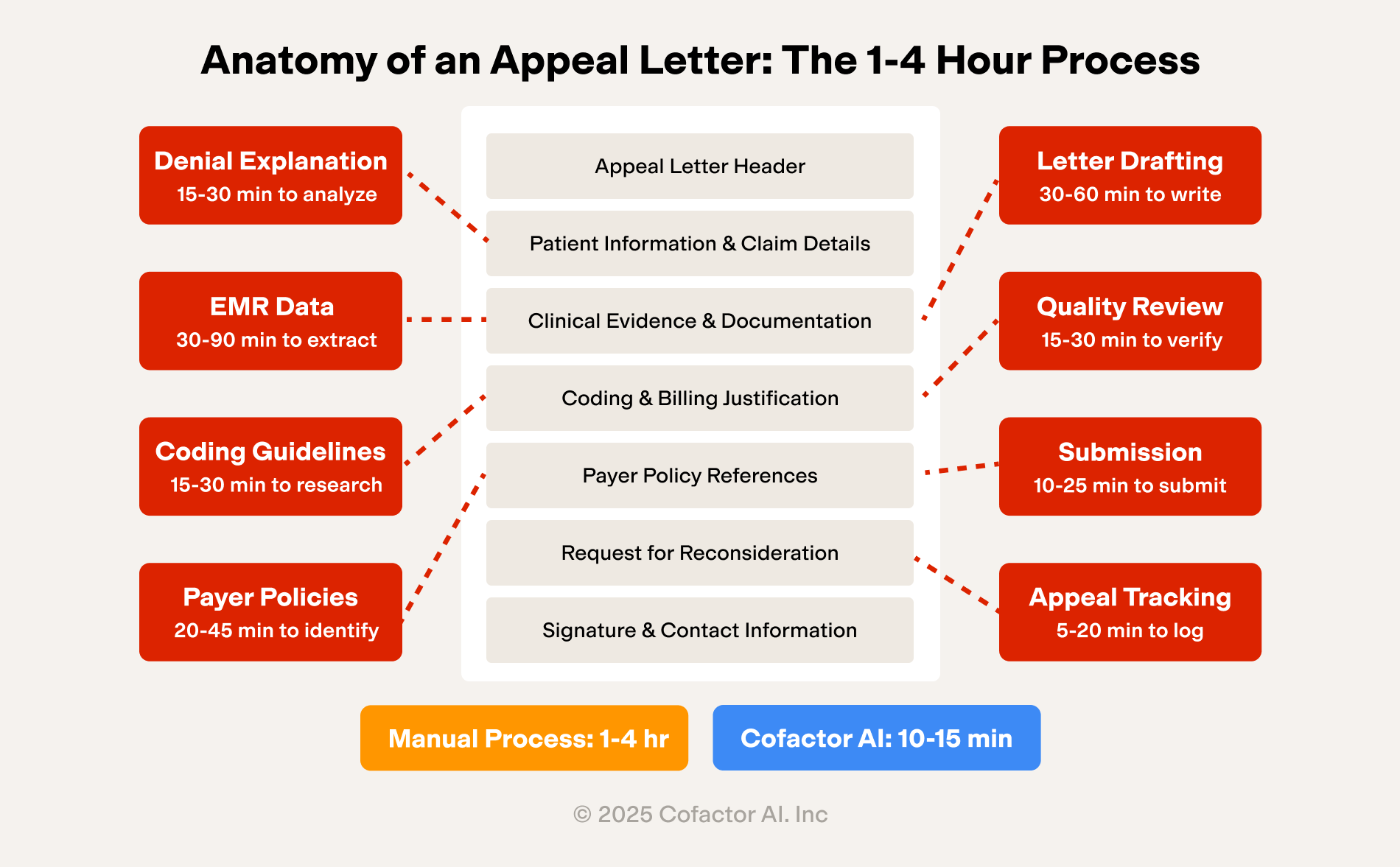
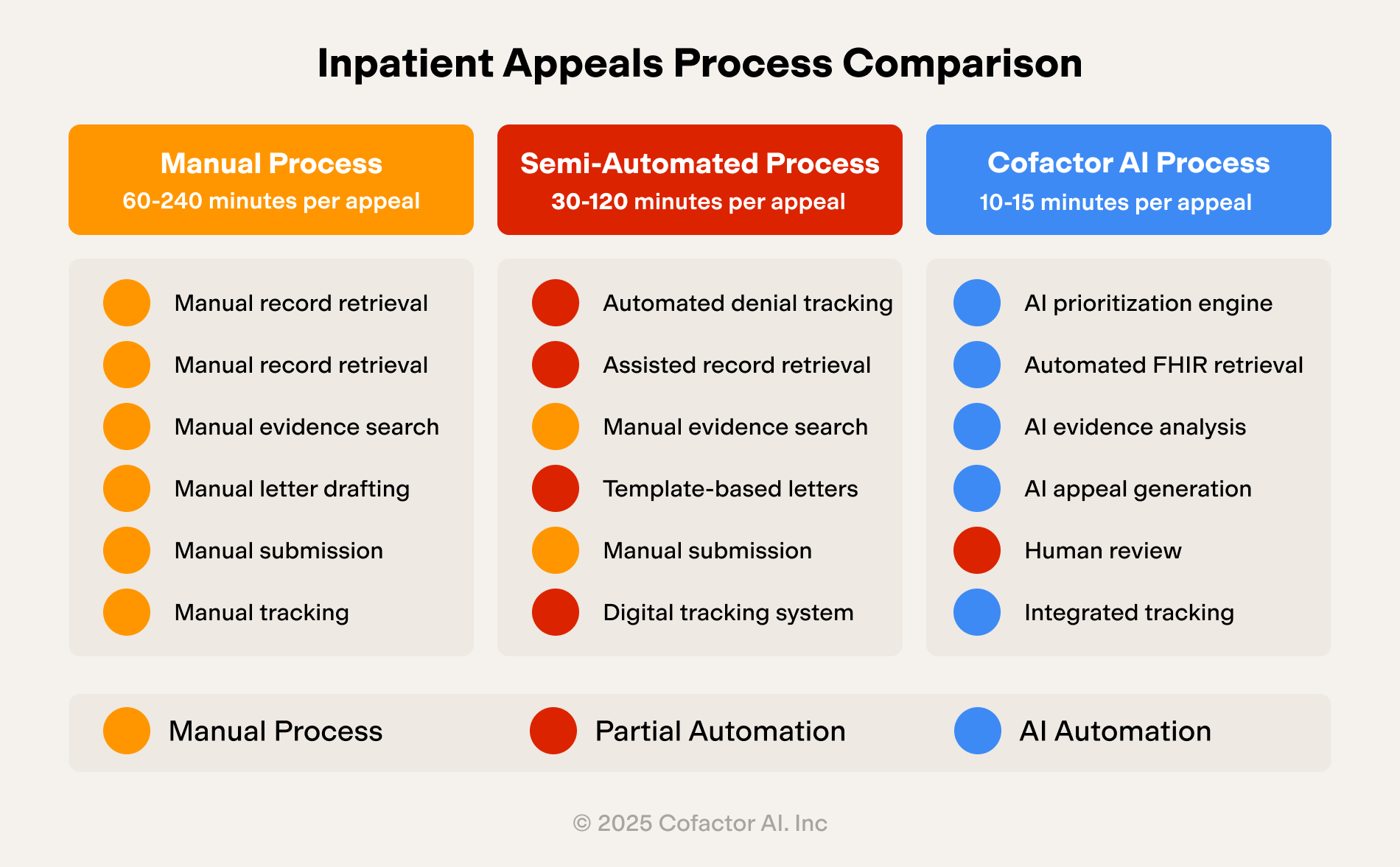
Cofactor's AI technology analyzes denial documentation and generates comprehensive, evidence-based appeal letters tailored to the specific denial reason, transforming what typically takes 1–4 hours per appeal into a process requiring just 10–15 minutes of staff time. Our platform automatically retrieves relevant clinical documentation through FHIR integration with your EMR.
Our sophisticated prioritization engine evaluates financial impact, appeal deadline, and likelihood of overturn for each denial, helping your team focus where they'll have the greatest impact. By analyzing patterns in denial data, Cofactor helps identify emerging denial trends that might indicate new payer policies or documentation gaps.
Conclusion: Protecting Your Hospital from RAC Audit Financial Impact
RAC audits represent a significant challenge for hospitals, particularly due to their post-payment nature that disrupts cash flow and creates financial uncertainty in an industry already struggling with thin margins. By implementing robust prevention measures, optimizing your team structure, leveraging technology, and investing in staff training, your organization can reduce the financial and administrative burden of audits while improving overall revenue integrity.


.svg)