
Nearly three in four healthcare providers report that insurance claim denials have increased between 2022 and 2024, with approximately 38% of survey respondents indicating that at least one in ten claims are denied (Experian Health, 2024). Among these denials, those based on medical necessity represent a significant and persistent challenge for healthcare organizations, adding administrative burden and threatening financial stability.
Understanding Medical Necessity Denials
Medical necessity denials occur when an insurance provider determines that a service, procedure, or treatment isn't medically required according to their specific criteria. The term "medically necessary" generally refers to healthcare services or supplies needed to diagnose or treat an illness, injury, condition, disease, or its symptoms that meet accepted standards of medicine.
While this definition sounds straightforward, interpretation varies significantly between providers and payers, creating a common source of friction in the reimbursement process. According to KFF's analysis of HealthCare.gov marketplace insurers, only about 6% of in-network claim denials were based on medical necessity in 2023 (KFF, 2025). However, these denials often involve high-dollar services that significantly impact a provider's bottom line.
The Financial Impact of Medical Necessity Denials
Medical necessity denials can have substantial financial implications for healthcare providers. While not always an "all or nothing" scenario, these denials frequently result in complete loss of expected revenue for certain procedures or services, partial reimbursement in some cases, additional administrative costs for appeals and resubmissions estimated at $25–$118 per claim (HFMA, 2022), and delayed cash flow as denied claims move through the appeals process.
The industry standard benchmark for medical necessity denial rates is approximately 5%, but many organizations experience higher rates, particularly for certain high-risk procedures and services (MD Clarity, 2025). Each percentage point above this benchmark represents significant lost revenue opportunity.
Where Medical Necessity Denials Occur in the Revenue Cycle
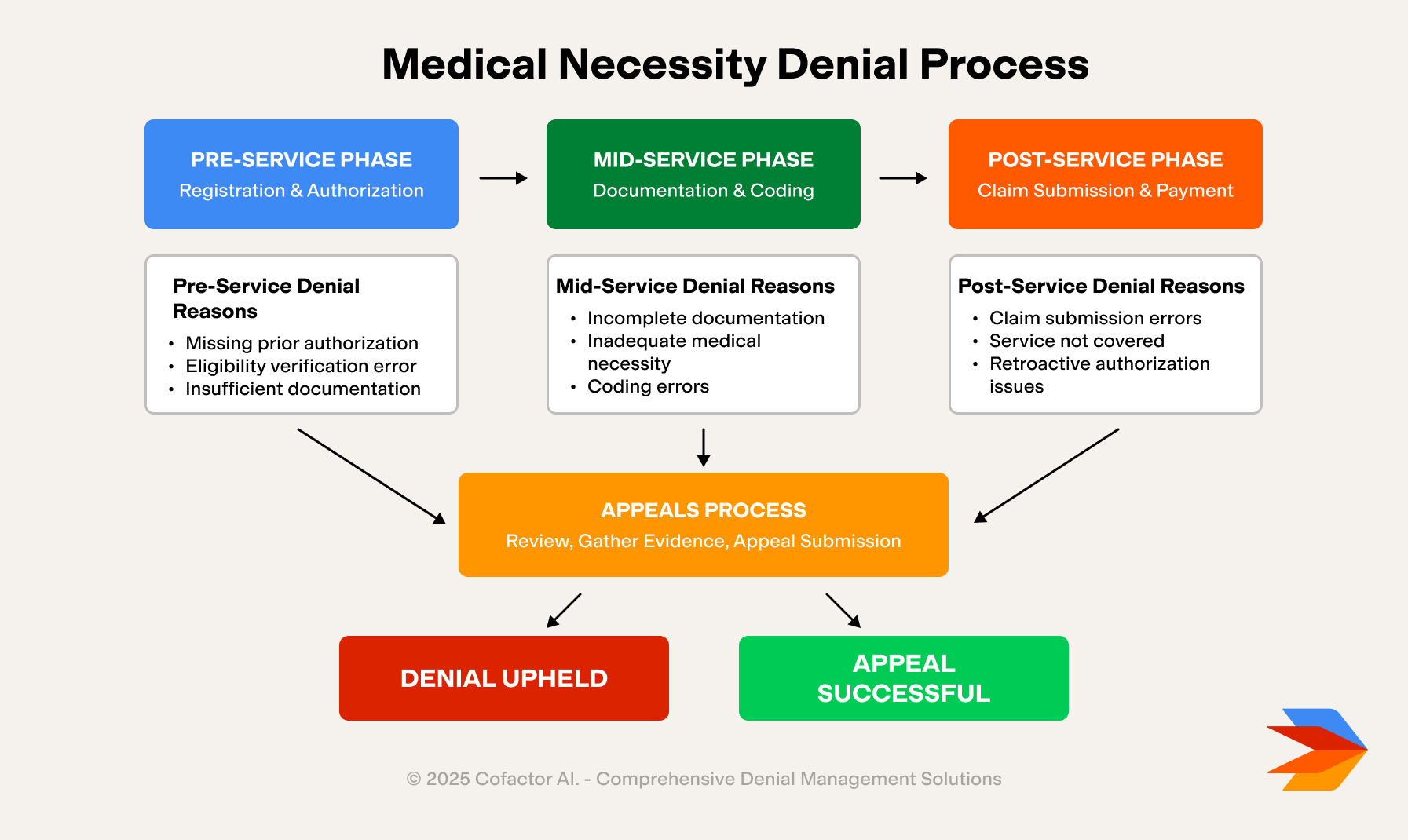
Medical necessity denials can occur at multiple points throughout the revenue cycle, though they most commonly manifest at these critical junctures:
Pre-Service/Front-End
Eligibility verification failing to identify medical necessity requirements, prior authorization rejections due to perceived lack of medical necessity, and patient registration with incomplete or inaccurate documentation. According to Change Healthcare, the front end of the revenue cycle sees the highest concentration of denial triggers, with nearly 27% of denials stemming from registration and eligibility issues (MGMA, 2024).
Mid-Revenue Cycle
Clinical documentation that isn't sufficient to establish medical necessity, coding where diagnostic or procedural codes don't align with medical necessity requirements, and charge capture where charges don't match documented medical necessity criteria. This phase is particularly vulnerable as patient documentation must translate into appropriate codes that justify the medical necessity of services rendered.
Back-End/Post-Service
Claim submission lacking proper documentation or coding, claim adjudication where payers determine services weren't medically necessary, and payment posting where partial payments are received due to medical necessity determinations. Even after a denial occurs, the revenue cycle continues with the appeals process, creating additional work for already strained staff resources.
Most Commonly Denied Procedures for Medical Necessity
Diagnostic Imaging
Advanced imaging studies are frequently targeted for medical necessity denials, including:
- MRI scans: Particularly for musculoskeletal conditions without prior conservative treatment
- CT scans: Especially when ordered for screening purposes rather than based on specific symptoms
- PET scans: Often require extensive documentation to justify medical necessity, especially for cancer staging
Insurance carriers typically require clinical documentation showing that the imaging is necessary based on symptoms, prior treatment failures, or specific diagnostic criteria. For example, Medicare and commercial payers often require documentation of failed conservative therapy before approving MRIs for joint pain (Diagnostic Imaging, 2024).
Cancer Treatments
Cancer-related claims face unique challenges with medical necessity denials:
- Newer therapies and medications: Often denied as "experimental" despite oncologist recommendations
- Off-label use of approved medications for rare cancer types
- PET scans for treatment monitoring: Frequently challenged based on frequency
- Genetic testing: May be denied if not directly tied to treatment decisions
As new cancer treatments emerge, payers may be slow to update their medical necessity criteria, leading to denials for treatments that oncologists consider standard of care (American Cancer Society, 2024).
Orthopedic Procedures
Joint replacements and other orthopedic procedures face intense scrutiny:
- Total joint replacements: Require extensive documentation of joint disease, failed conservative treatments, and functional limitations
- Arthroscopic procedures: Often denied without evidence of specific structural abnormalities
- Spinal procedures: High denial rates without documentation of neurological deficits or failed conservative care
For joint replacements specifically, many payers require documentation of end-stage joint disease, distinct structural abnormalities, and evidence showing the procedure's benefits outweigh the risks (Coronis Health, 2016). Medicare guidelines outlined in the CMS Major Joint Replacement booklet emphasize the need for detailed documentation of the patient's medical history, failed conservative treatments, and objective findings to support medical necessity (RACmonitor, 2022).
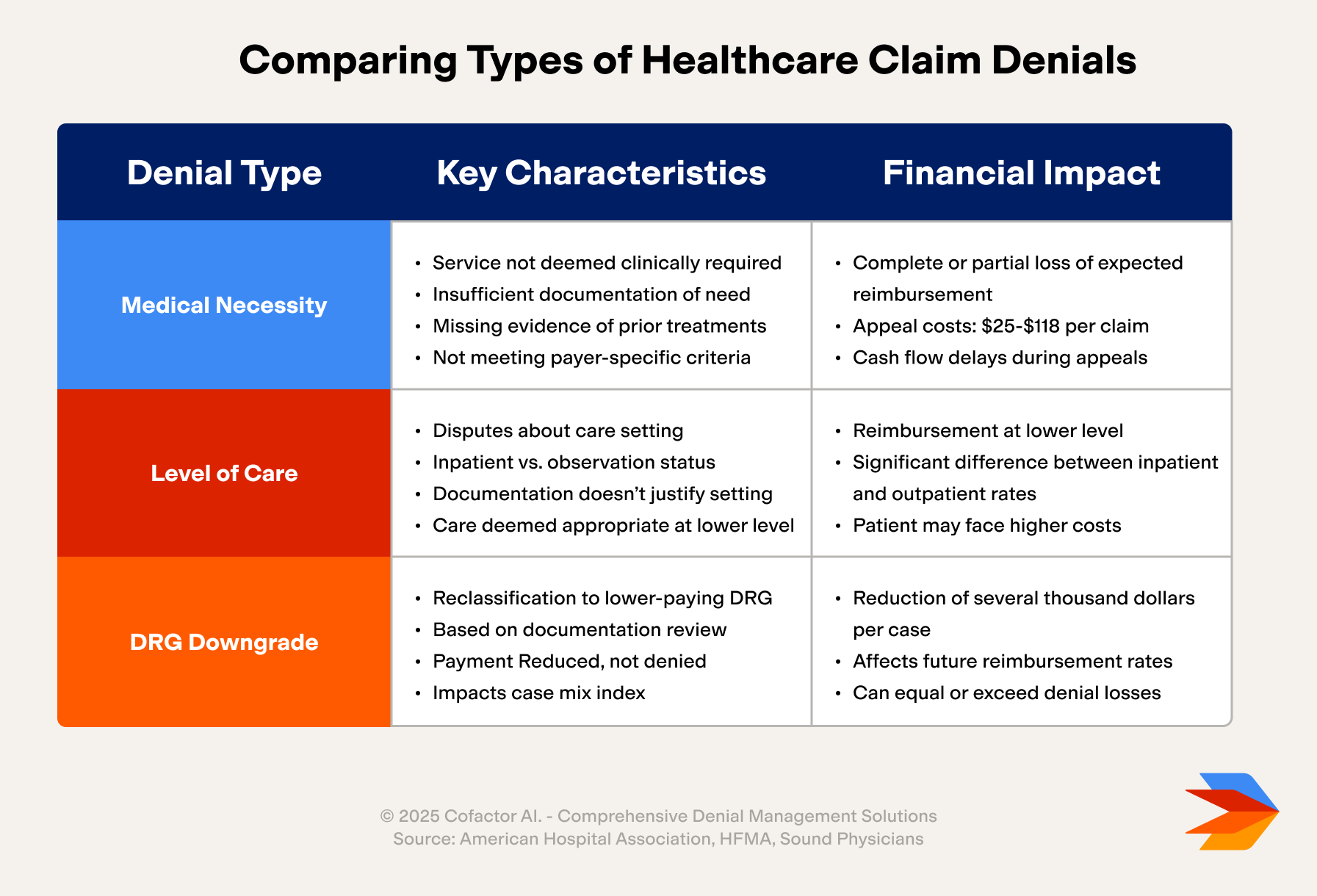
How Medical Necessity Denials Differ from Level of Care Denials and DRG Downgrades
Medical Necessity Denials occur when a payer determines that a service, procedure, or treatment wasn't clinically justified for the patient's condition, focusing on whether the care itself was required, regardless of setting or intensity.
Level of Care Denials focus specifically on the setting where care was provided, not whether the care itself was necessary. These occur when payers believe a service could have been provided in a less intensive setting, such as observation rather than inpatient.
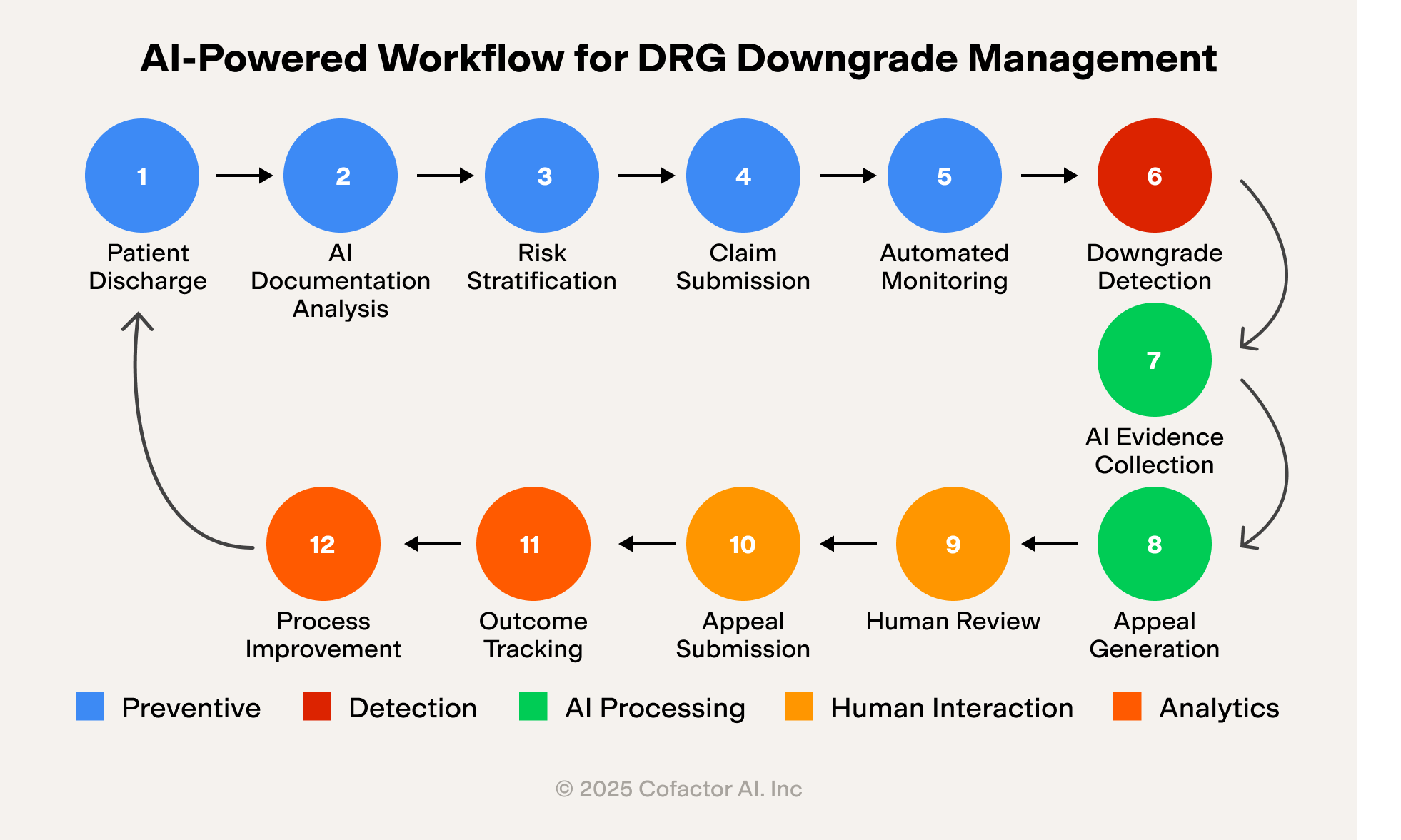
DRG Downgrades differ from outright denials in that the payer doesn't refuse payment entirely but instead reclassifies the patient's stay into a lower-paying DRG category. According to Sound Physicians, DRG downgrades may cost hospitals as much or more than medical necessity denials, with reductions of several thousand dollars per case when, for example, pneumonia with sepsis gets downgraded to simple pneumonia.
Denial Formats and Communication Methods
Medical necessity denials can arrive in several formats, each requiring a different approach to interpretation and response:
Electronic Remittance Advice (ERA)
The most common format for denials is through the Electronic Remittance Advice, which contains standardized codes indicating the reason for denial:
- Claim Adjustment Reason Codes (CARCs): These codes explain why a claim was adjusted or denied, with specific codes for medical necessity issues.
- Remittance Advice Remark Codes (RARCs): These provide additional information about the denial, often citing specific payer policies or documentation requirements.
For example, CARC 50 is commonly used to indicate "These are non-covered services because this is not deemed a medical necessity by the payer." The X12 organization maintains the official list of these standardized codes used throughout the healthcare industry.
Payer-Specific Denial Letters
Many payers send formal denial letters that provide more detailed explanations of why services weren't considered medically necessary. These letters typically include:
- Patient and claim identification information
- Specific denial reasons
- References to payer policies or clinical guidelines used in the determination
- Instructions for appeal rights and processes
- Timeframes for submitting appeals
Payer Portal Notifications
Increasingly, payers are communicating denials through their provider portals, where additional information may be available:
- Real-time denial notifications
- Searchable databases of denied claims
- Documentation upload capabilities for appeals
- Tracking features for denial status
Explanation of Benefits (EOB)
Patients receive Explanations of Benefits that indicate when services have been denied, often prompting them to contact the provider about the denial. These documents typically show:
- The service that was denied
- The reason for denial, often in simplified language for patients
- The patient's financial responsibility
Understanding these various formats is crucial for effective denial management, as each format may contain different levels of detail and require different response mechanisms.
Key Metrics to Monitor
When tracking medical necessity denials, hospital administrators should monitor these essential metrics:
- Denial rate by payer: Track the percentage of claims denied by each payer to identify problematic relationships.
- Denial rate by service type: Determine which services trigger the most denials.
- Appeal success rate: Measure the percentage of successfully overturned appeals.
- Time to appeal resolution: Monitor how long denials take to resolve.
- Financial impact: Calculate the dollar value of denied claims and potential revenue at risk.
Root Cause Analysis Techniques
Conduct Regular Denial Pattern Analysis: Establish a standardized process to analyze denial trends weekly or monthly, looking for patterns related to specific procedures, individual providers or coders, particular payers, and common documentation gaps.
Implement Clinical Documentation Reviews: Perform targeted audits of documentation for frequently denied services, comparing practices between providers with high and low denial rates.
Evaluate Pre-Service Authorization Processes: Examine accuracy of diagnosis and procedure codes, completeness of clinical information, timeliness of submission, and communication of authorization requirements to clinical teams.
Team Structure Optimization
Establish a dedicated cross-functional denial management team representing clinical staff, coding specialists, revenue cycle managers, payer relations representatives, and legal/compliance personnel. Define clear ownership for each step of the process, and consider a case management approach for complex or high-dollar denials.
Technology Integration Strategies
Implement automated denial prevention tools like claim scrubbing software that flags missing information and applies payer-specific rules. Leverage predictive analytics to identify high-risk claims before submission. Integrate EHR with revenue cycle systems to automatically transfer clinical data and flag documentation gaps in real time.
Staff Training Approaches
Develop specialty-specific documentation guidelines, implement regular provider education on payer criteria and documentation best practices, and train dedicated appeal specialists in payer-specific processes and effective appeal letter writing.
Performance Measurement Frameworks
Establish KPIs tracking overall denial rate and trend, denial rate by reason/payer/service line/provider, appeal success rate and financial recovery, and average time to appeal resolution. Implement financial impact analysis measuring direct revenue loss, administrative costs, and staff time. Track provider-specific metrics to drive targeted education.
Current Industry Trends in Medical Necessity Denial Management
Increasing Payer Scrutiny of Level of Care Determinations
Medicare Advantage plans denied 3.4 million prior authorization requests for health care services in 2022, with a denial rate of about 7%, a share that has increased over recent years (KFF, 2025). This trend extends to medical necessity determinations after services are rendered, with particular focus on inpatient vs. observation status decisions.
Rising Complexity of Payer Requirements
The complexity of payer requirements for medical necessity continues to rise. Between March 2020 and March 2022, there were more than 100,000 payer policy coding and reimbursement changes (HFMA, 2024). This complexity makes it increasingly difficult for providers to keep up with requirements across multiple payers.
Shift Toward AI-Driven Denials Management
The healthcare industry is seeing a decline in the use of automation for claims management, with only 31% of providers currently using some form of automation or AI in 2024, down from 62% in 2022 (Experian Health, 2024). This surprising decrease may be related to decreased confidence in how these technologies work, as only 28% feel confident in their understanding of automation and AI, compared to 68% in 2022.
Growing Spotlight on Payer Denial Practices
Recent events have increased public scrutiny of health insurer claims practices. A 2023 KFF survey found that 17% of respondents reported an insurer had denied coverage of care recommended by a doctor, with more than half saying neither they nor their doctor challenged the denial (U.S. News, 2024). This heightened attention may lead to regulatory changes and increased pressure on payers to justify denial decisions.
Increasing Financial Vulnerability of Healthcare Providers
With rising denial rates and the variable financial impact of medical necessity denials, healthcare organizations are facing unprecedented financial vulnerability. According to a 2023 study by the American Hospital Association, a majority of hospitals report having claims that remain unpaid for extended periods, with some claims still unresolved after several years, compounding the financial impact of denials.
How Cofactor AI Helps Resolve Medical Necessity Denials
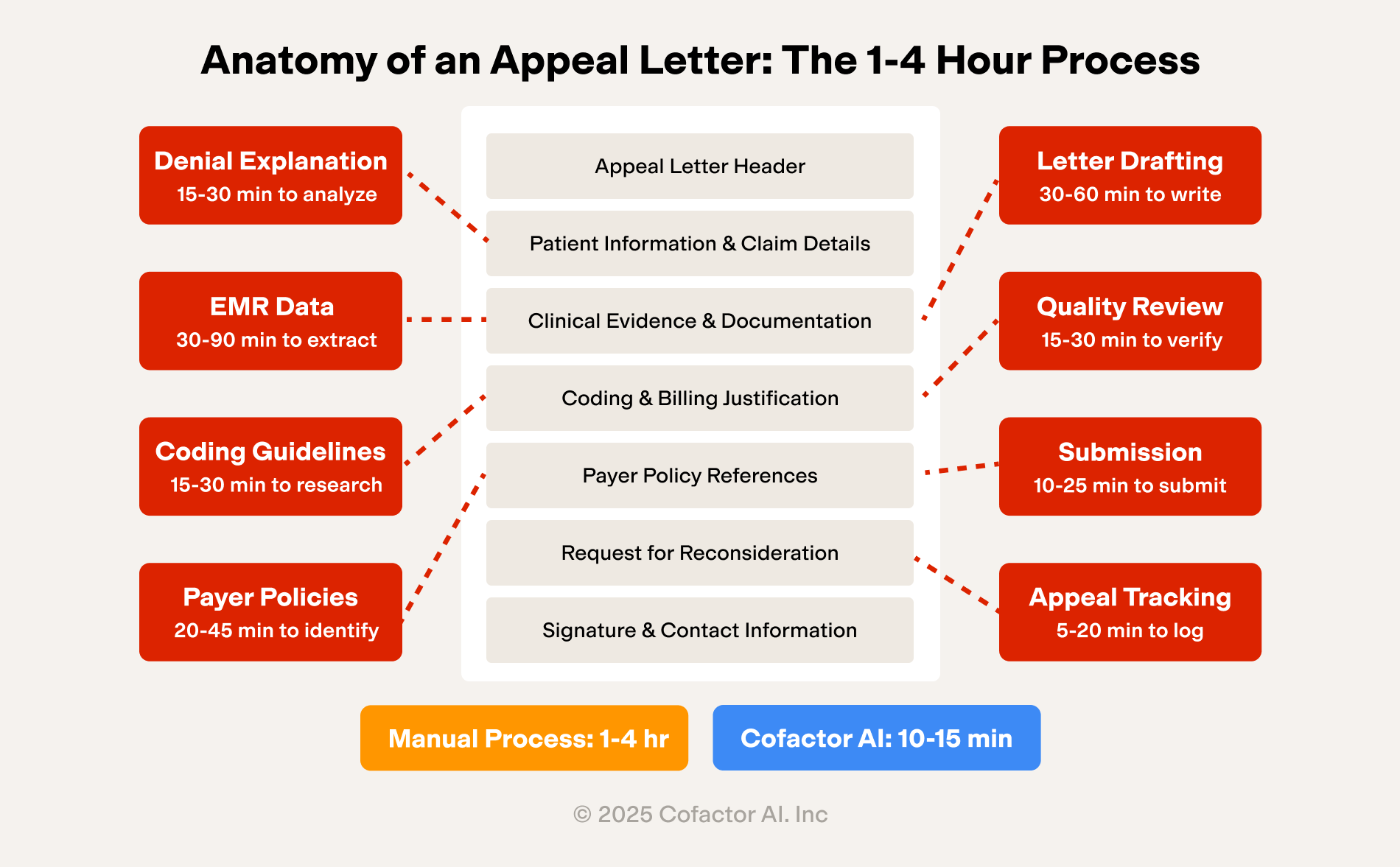
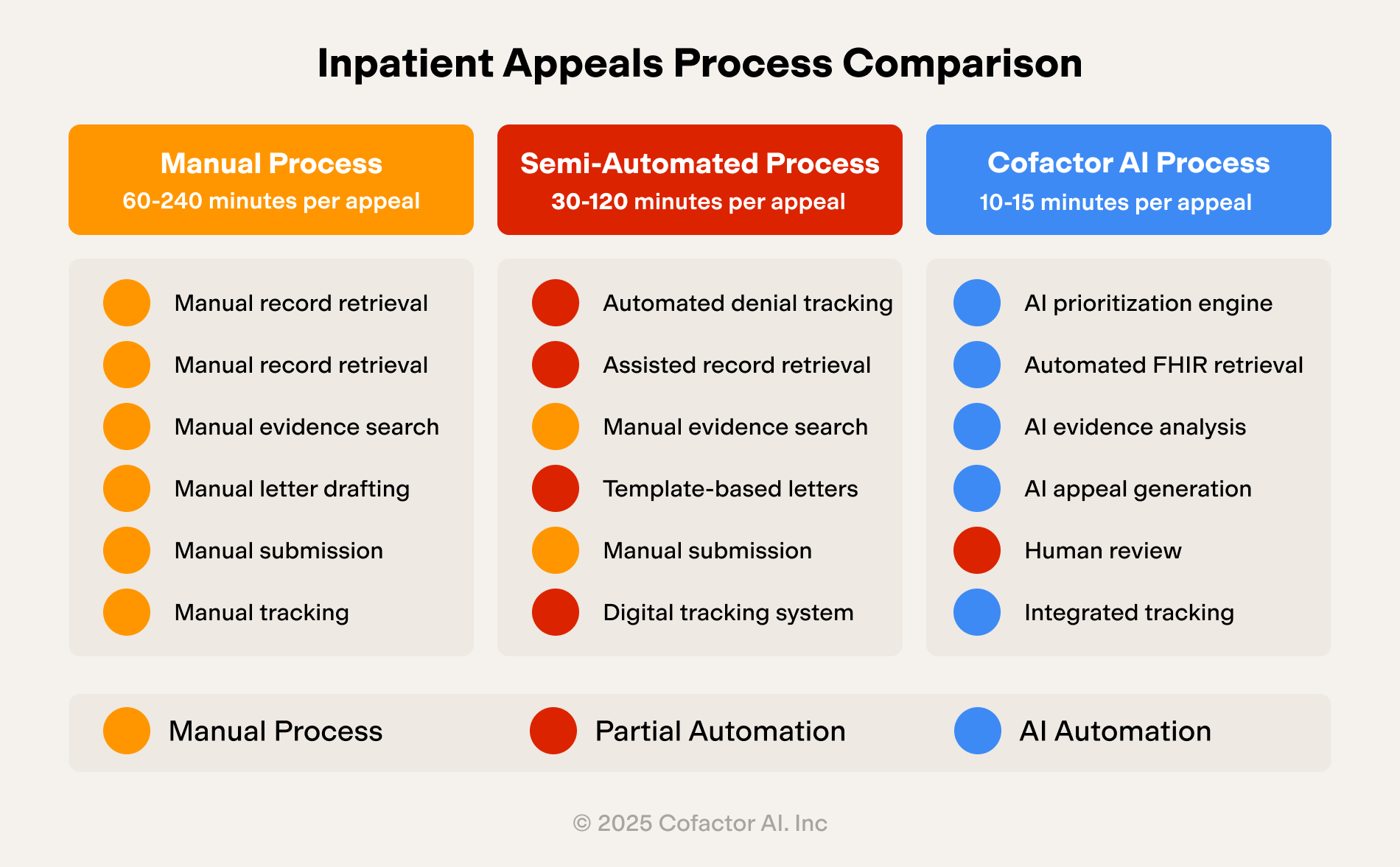
Cofactor AI's denials management platform transforms the appeals process by automatically generating comprehensive appeal letters that incorporate the strongest evidence from the medical record, appropriate guidelines, and payer policies, turning what traditionally takes 1–4 hours per appeal into a process requiring just 10–15 minutes of staff time.
Our platform's prioritization engine evaluates each denial based on financial impact, appeal deadline, and likelihood of overturn, ensuring your team focuses efforts where they'll have the greatest impact. Cofactor's AI analyzes medical documentation, payer policies, clinical guidelines, and coding standards to identify the strongest evidence, helping identify documentation gaps and patterns that inform clinician education.
By automating the most time-intensive components of the appeals process, Cofactor enables facilities to appeal a significantly higher percentage of denials without adding staff. Medical necessity denials present a significant challenge for healthcare organizations, but with the right strategies and technology, you can transform this challenge into an opportunity for improved financial performance and operational efficiency.



.svg)